Importance
Opportunities to enhance competitiveness in business lie in delivering products and services that meet consumer standards and align with consumer needs. This starts with efficient quality management and control in the production of goods and services.
OR operates in both the oil and retail businesses, delivering various products and services that are closely aligned with customers and consumers, especially in our continuously expanding food and beverage business. This may have direct impacts on customers and consumers in various aspects, such as health and safety and access to essential products. Therefore, OR emphasizes the importance of maintaining quality and service standards according to international standards, laws, and regulations from regulatory authorities. This ensures confidence that customers and consumers will receive quality products and services. The company sets goals to control the quality of products and services to meet standards, with an intention to create high-quality products and services that satisfy consumers.
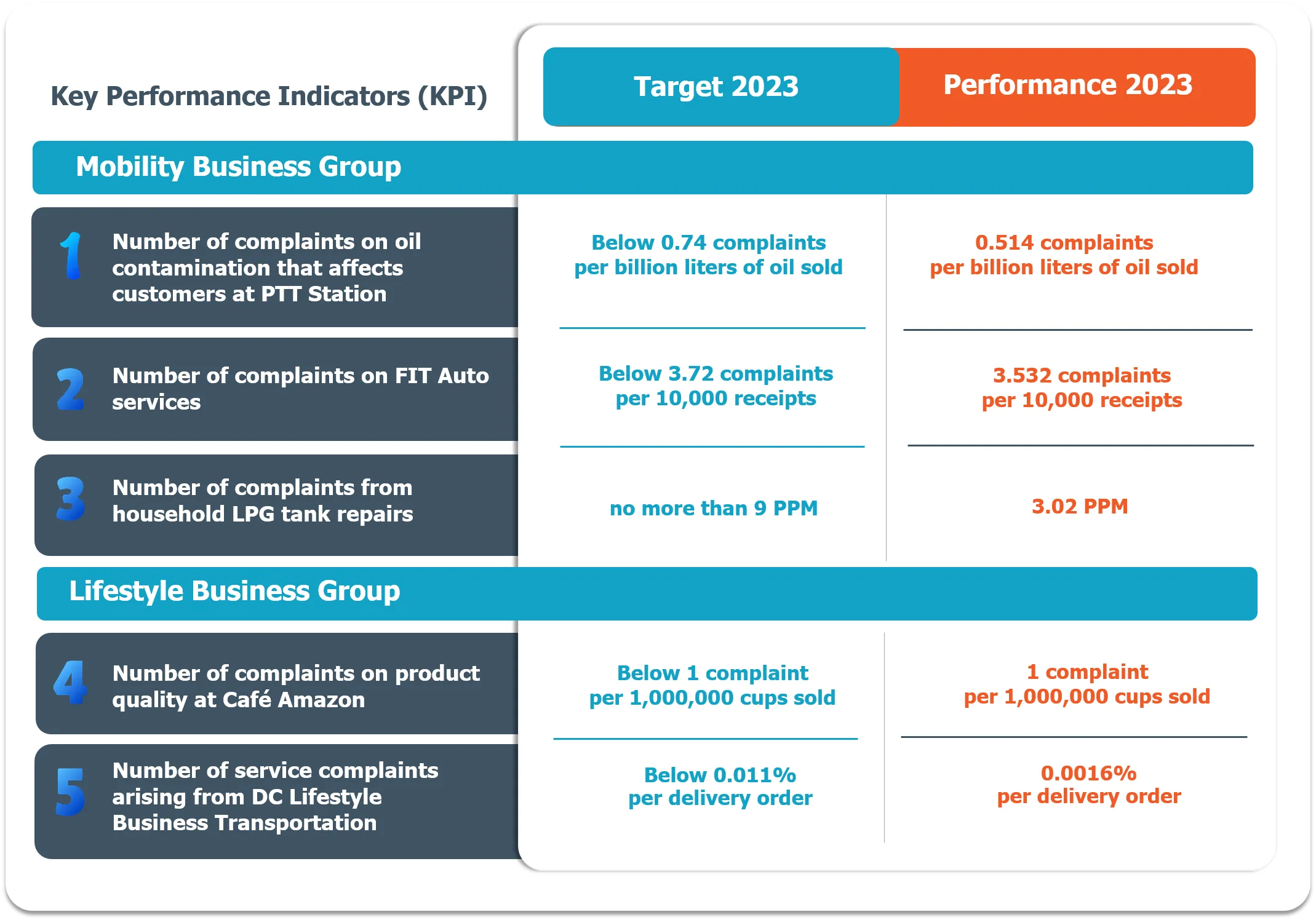
2023 Targets
Management Approach
Operating Framework and Related Policies
- Upholding Business Ethics in Business Activities Related to Customers and Consumers
With a dedicated commitment to ensuring high-quality products and services offered at fair prices, and securing customer and consumer satisfaction, OR has established ethics and moral principles for conducting business in the Customer Care Guide and Ethical Standards in the Corporate Governance Handbook. These documents outline the moral and ethical standards in conducting business to ensure the utmost satisfaction for customers and consumers.
Learn more: Click - Quality, Security, Safety, Health, and Environment Policy (QSHE Policy)
The Quality, Security, Safety, Health, and Environment Policy (QSHE Policy) serves as a guideline for OR Group in conducting business to control the processes of producing products and services to meet standards. Emphasizing safety and environmental friendliness throughout the value chain, OR aims to deliver high-quality products and services that align with customer requirements and comply with legal regulations, preventing product and service quality defects that could impact customers, reputation, and the Company’s image. In continuous pursuit of quality development at both group and individual levels, OR promotes creative thinking, knowledge sharing, and experience transfer through systematic Knowledge Management (KM) practices. This approach leads to increased productivity, innovation, and new business ventures, fostering sustainable growth. The QSHE policy is communicated throughout the OR group using the OR Group Way of Conduct Framework as a practice guideline or baseline for steering business operations in the same direction.
Learn more: Click - OR Group Sustainability Management Guideline
The OR Group Sustainability Management Guideline was developed to provide OR and OR Group with a framework for implementing sustainable management practices that can be applied appropriately. Within this standard, there are key points regarding sustainability that emphasize taking responsibility for stakeholders. The aim is to deliver products and services to all stakeholders in a balanced and sustainable manner. This includes caring for products and services, managing the supply chain, promoting innovation and technology for everyone, addressing consumer issues, engaging with communities, and community development.
Product and Service Stewardship Implementation
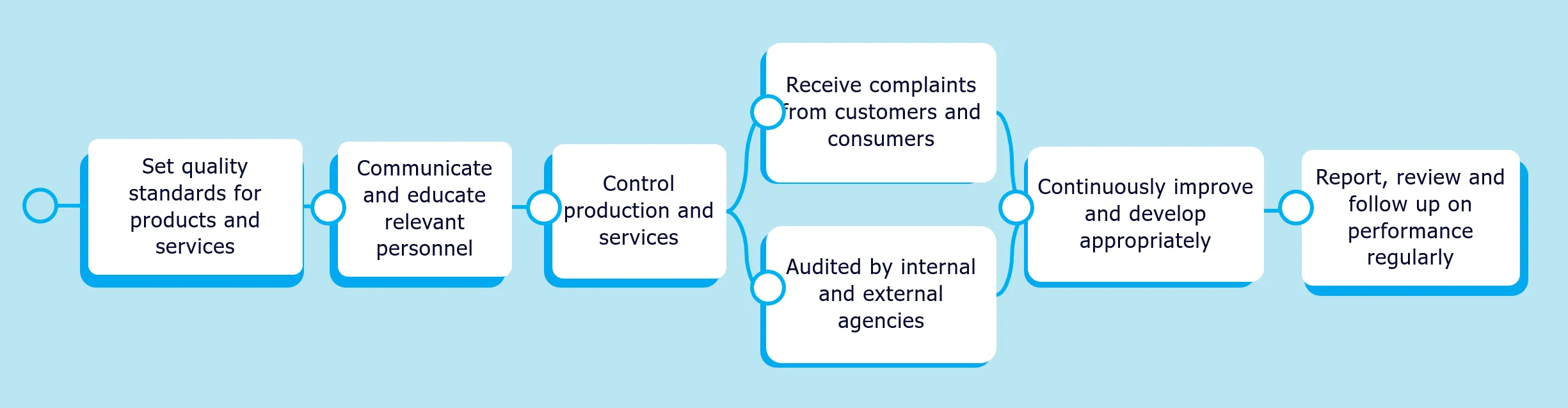
OR has developed product and service stewardship implementation plans for each business line to meet the different contexts, and included ‘Product and Service Standard: Quality/Safety/Environment’ as one of the corporate risks in the corporate risk profile, listed under business and operational risks, in order to highlight the importance of product and service stewardship in our business. The company conducts the training to employees who work in related to product and service stewardship in businesses and has audit system that involves both relevant internal and external audits, referred to as the ‘Internal Audit’ and ‘External Audit by Third Party’ respectively, to ensure that company’s products and services are aligned with prescribed standards and regulations. Audit reports are sent to executives and related functions as monthly report and the product and service stewardship management is reviewed regularly, or in case of significant changes of the business.
Performance reporting and monitoring of product and service stewardship is reported on a quarterly basis (key risk indicator: KRI) at the OR QSHE GMC meeting, and depending on the different product and service. The performance data as reported will be used in analysis for improving process and operation continuously.
Overview of operational guidelines for product and service stewardship
Mobility Business Group:
PTT Station
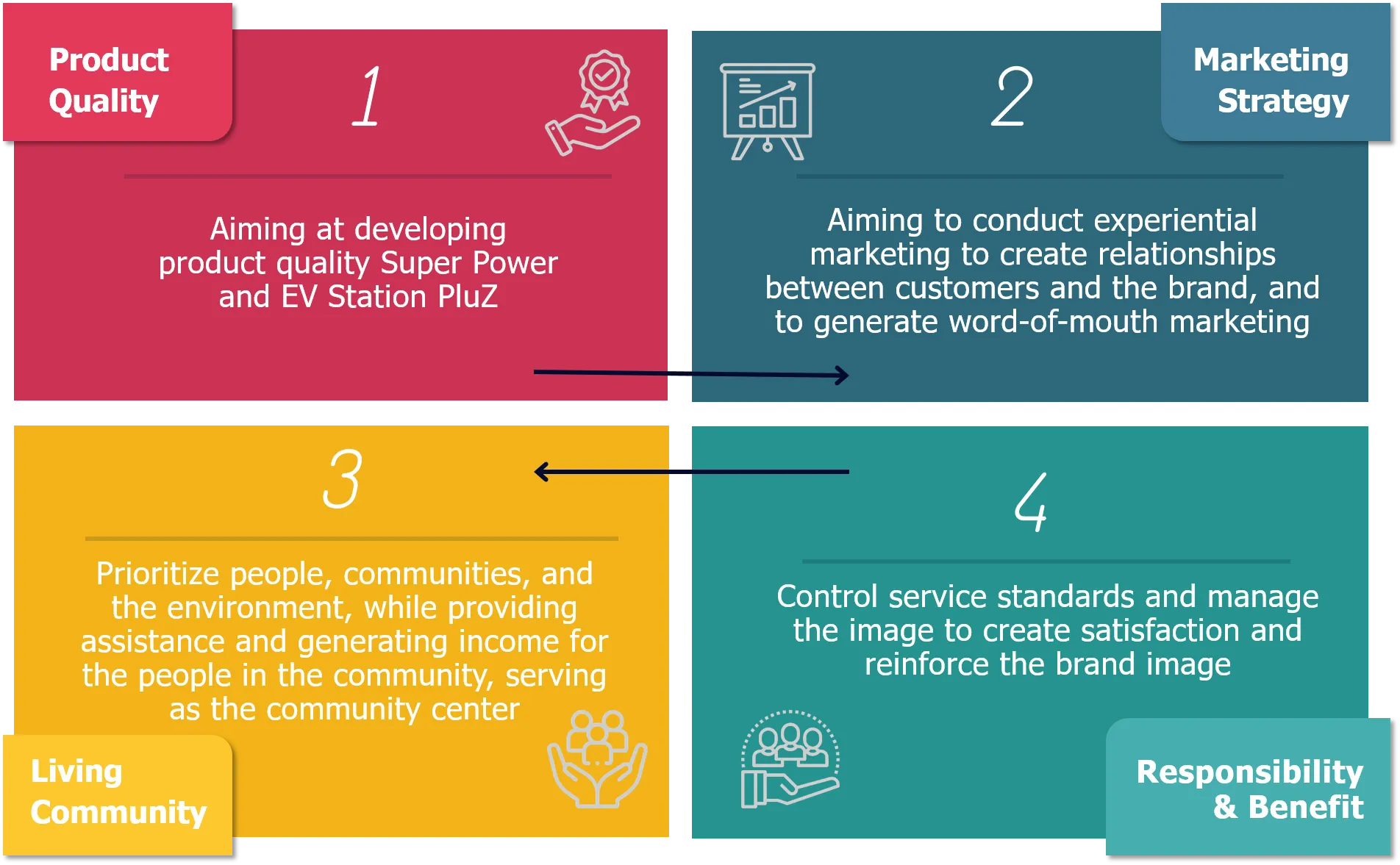
With the intention of making PTT Station a space that truly enhances everyone’s well-being and a leader in the energy sector, in 2023, PTT Station’s direction and business strategy focused on the framework of quality and service, aiming to promote a good living environment, collaborating with stakeholders and the community in 4 key aspects:
PTT Station places emphasis on the convenience and safety of all consumers, adhering to legal standards and relevant regulations through various components within PTT Station, whether it’s designing service stations with a Friendly Design for convenience and safety, catering to diverse customer groups, accommodating all genders, ages, and body types equally, and providing assistance points for travelers with basic roadside assistance equipment. Additionally, there are first aid equipment and assistance points available at PTT Stations to ensure the well-being of both vehicles and people throughout their journey.
In addition, there is a training program for employees at PTT Station to respond to emergencies, and the establishment of Service Station Standards to communicate the safety management standards of PTT Station with distributors and those responsible for managing PTT Stations that are Company owned and operated. This ensures that they can provide services according to the specified standards and follow operational guidelines in the event of emergencies, as well as adhere to communication protocols, ensuring that PTT Station complies with the highest safety standards, serving all customers and communities and ensuring that individuals of all ages and body types can access and safely and conveniently use the services.
Details of safety management in PTT Station: Occupational Health and Safety topic Click
Quality assessment of PTT Station standards nationwide
OR has applied Quality Management System (QMS) to audit PTT Station on a regular basis. IT Technology is developed to record various audit information accurately and quickly through the mobile application. The audit report is sent to PTT Station management monthly. The assessment contains four parts as follows:

Auditors visit the PTT Stations to assess each PTT Station based on the audit criteria according to the PTT Station Standard Assessment Manual. There are 2 assessment teams as follows:
- The Mobile Audit team is the PTT Station audit team who performs the monthly audit. If there is any issues or incidents that need improvement, the Mobile Audit team will communicate the issue, details, along with photos attached, so that the PTT Station can take further corrective actions and make improvements.
- The Mystery Shopper team is a third-party auditor that assesses PTT Stations anonymously. This evaluation includes PTT Stations operated by OR and those operated by independent dealers, as well as owned by PTT Retail Management Company Limited (PTTRM).
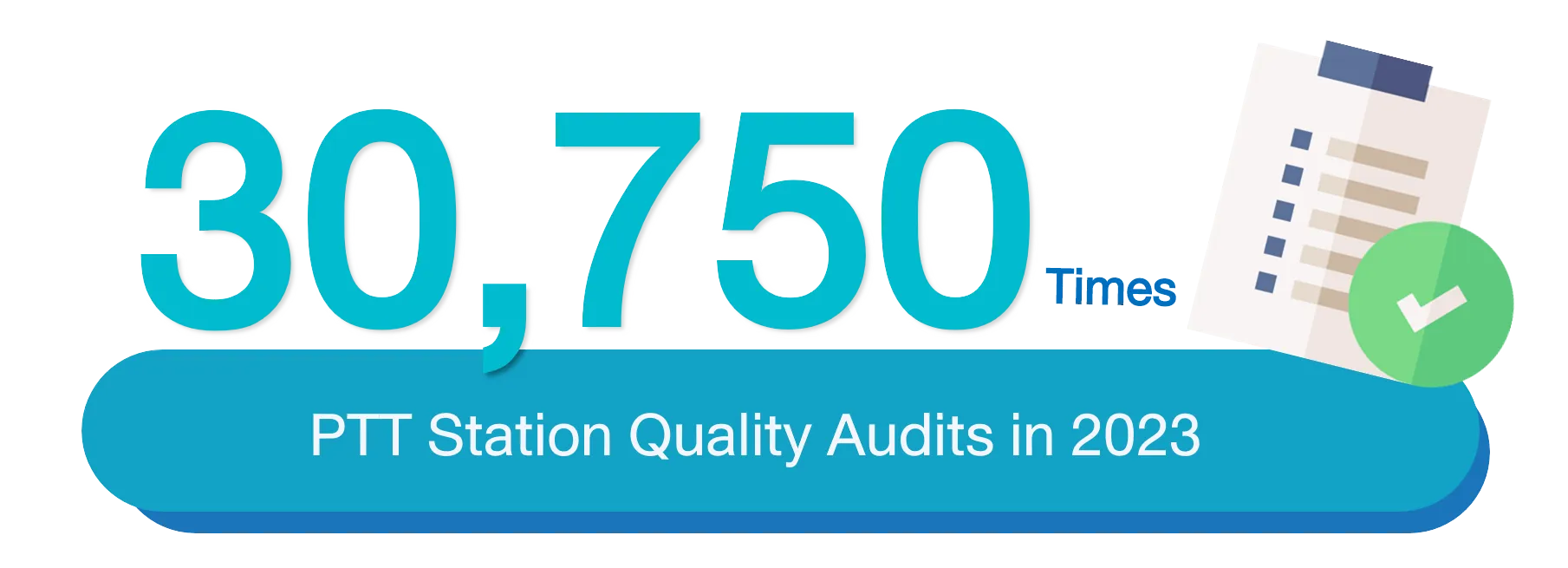
In 2023, there were a total of 30,750 audits conducted for PTT Stations. This comprised 24,600 audits by the Mobile Audit team and 6,150 audits by the Mystery Shopper team. The audits covered all 2,050 stations (100% of all stations) and 160 Regional Management (RM) sites (100% of all RMs). These assessments were carried out through either Mobile Audit and/or Mystery Shopper at least once during the past year.
Fuel Product and Lubricants Quality Control Process
OR manages, controls, and oversees the storage, receipt, and distribution of reserve petroleum products, liquid petroleum gas (LPG), and other refined products at storage facilities nationwide, as well as the operation of storage, receipt, distribution, and the packaging of products for transfer between storage facilities and delivery to customers via various modes of transportation, including automobiles, trains, and maritime vessels.
Currently, OR manages and controls the storage, receipt, and distribution of reserve petroleum products, liquid petroleum gas (LPG), and other products across the country. This is done to meet the needs and provide benefits to the public in all areas, reduce transportation costs as a part of the fuel price, and assist the public in accessing quality fuel at fair prices. There is a Quality Analysis and Product Research & Development Department supporting the operational unit responsible for petroleum warehouse operations. The unit’s main mission is to provide support to the operational unit in controlling the quality of products. It also functions as a laboratory for analyzing and testing leading petroleum products using modern tools and equipment in accordance with international standards. The unit is involved in analyzing and controlling the quality of various petroleum products, including LPG, ground fuel, aviation fuel, industrial fuel, marine fuel, and special products. Furthermore, it supports the lubricant business in conducting hand-blend experiments to develop and research lubricant oil formulations, as well as performs quality control for all lubricant products sold under the PTT Lubricants brand, covering all processes from procurement, to receipt, storage, distribution, as well as distribution to consumers in accordance with the Quality Control Plan and ISO 9001 systems to ensure high-quality products in compliance with legal requirements and customer agreements. The Quality Analysis and Product Research & Development Department has also been certified for the competence of its testing laboratory and calibration laboratory according to ISO/IEC 17025, an international standard recognized worldwide.
In addition, the Quality Analysis and Product Research & Develpment Department also operates a fleet of 7 Mobile Laboratories. These laboratories are responsible for planning quality inspections of the fuels sold at PTT Station stations. The inspections are Random Checks, performed at least once a year. In 2023, quality inspections of fuel at PTT Stations were carried out according to the plan, covering a total of 2,056 stations, representing 100% of the stations.
PTT Cooking Gas Business
Building on the success in the LPG market, PTT formulated a business strategy for LPG in 2023 under the concept ‘LPG for All,’ incorporating the 5Cs:Customer: Engaging in business collaborations with dealers, Consumer: Accessing consumers directly, Community: Enhancing the quality of life for communities and society, Country: Creating a society focused on safety and sustainability, Collaboration: Conducting business through collaboration among all parties to foster business growth, while taking care of stakeholders from all aspects
To ensure that OR’s customers are safe while using the product, OR focuses on providing product knowledge training to suppliers and customers. and performing emergency drill plans for the customers at the LPG filling plant and LPG service stations regularly, as well as increasing the safety standards of cooking gas cylinders, which are made of steel that is thicker than the required standard in order to ensure the cylinders withstands pressure very well. The material has been certified by the Thai Industrial Standards Institute (TISI). Every cylinder must pass the standard 6 step quality control and safety measures before being delivered to consumers as follows:
- Inspect the condition of the cylinder to determine whether it meets the safety standards. There must be a TIS mark stamped on the cooking gas cylinder. If a cooking gas cylinder is found to not meet the standards, it will be sorted for maintenance or destruction.
- Clean the cylinders that have already passed the standard LPG cylinder condition inspection.
- While filling the gas cylinder, the gas weight must be controlled according to the standard of size of the cylinder.
- In the weighing process, if the weight is lacking or exceeds the specified standard, the cylinder is taken back to the filling station to be refilled and re-weighed. This ensures that every cylinder meets the LPG content standard.
- Inspect the cylinder for leaks by testing the flue gas cylinder, valves, and valve threads. If a leak is found, the cylinder will be sorted out immediately.
- Inspect the valves and gold seals. The inspection of the tightness of the seals is the final step before delivering the cylinder to the shop for further delivery to the consumer.
Cooking gas cylinders that have reached the age of 5 years from the month/year of the last test will be put to the hydrostatic test process to re-test for leaks. Cylinders that have reached the age of 10 years will be put to the expansion test process to determine the expansion rate of the gas cylinder at the specified pressure according to the industrial product standard regarding the use and maintenance of liquefied petroleum gas cylinders (TIS 151). The valves of the cylinder must also undergo a safety testing process. Valves that are less than 10 years old will be tested for leakage and safety relief. Valves that are damaged or older than 10 years will be destroyed to ensure that consumers use the safest cooking gas cylinders.
OR has integrated the safety innovation “Check Lock Valve System” according to TIS 915-2562 standard regarding valves for liquefied petroleum gas cylinders, with a tongue design for the fuel gas cylinder to prevent gas leakage and fires during transportation and consumer use.
Lubricants Business
PTT Lubricants and FIT Auto
The safe operation of OR’s lubricant business covers raw material procurement, production, packaging, warehousing, and product transportation, loss prevention from emergencies, crisis, potential occupational injuries and illnesses to employees and stakeholders, as well as improving the working environment to promote good quality of life for workers. OR focuses on health and safety throughout the supply chain through analysis and a development plan to reduce potential risks. The details are as follows.
- Preparation of operation manuals for FIT Auto automotive service in accordance with the Service Standard and the Operation Standard, both in the form of a booklet and an online format so that employees can study conveniently and offer training to FIT Auto automotive service technicians both theory and practice sessions, in order to operate and service customers according to the safety standard.
- Conducting training on service standards, such as management, sales techniques, and service operations, following the standards set by the Automotive Service Center (for authorized dealers), as well as exceeding customer expectations, sales system processes, and product knowledge in the automotive sector.
- Installation of fire extinguishers at specified points, along with various warning signs to increase safety for customers of the FIT Auto automotive service.
- Quality control of vehicle inspection services at FIT Auto automotive service to ensure the safety of the vehicles brought in for service prior delivering to customers. The inspection is conducted by competent staff who is trained to operate according to operational standards. OR communicates safety information through using the Occupational Health and Safety Management and Safety Data Sheet according to GHS (Globally Harmonized Systems of Classification and Labelling of Chemicals) for all lubricants.
- Feature a chemical hazard symbol (Diamond Sign) on the packaging. For products sold to industrial customers, all products are labelled with hazard warnings and precautions, based on the Global Harmonized System (GHS), a system for generating Safety Data Sheets (SDS). In addition, Safety Data Sheets (SDS) for all products are published on the PTT Lubricants website.
- Use the Automated Storage and Retrieval System (AS/RS) for receive-collect-distribute at Lubricant Distribution Center. The system helps to collect and distribute the lubricant products effectively, fast and accurately, and reduce employee accident and product quality and quantity delivery defect incidents.
Safety data sheets (SDS) for all products: Website PTT Lubricants
PTT Lubricants is committed to continuous product development with excellent quality to instill confidence in customers when making purchases, through a quality control process in collaboration with partners through the Quality Management System (QMS) available on the website. The company also has a team of experts to provide knowledge about lubricant products to distributors and customers. Additionally, PTT Lubricants actively seeks feedback from customers and consumers through seminars and meetings with lubricant distributors, regularly meeting and visiting distributor groups through various channels, including exploring the commitment from PTT Lubricants’ customers and consumers, as well as FIT Auto. This is done to analyze suggestions and complaints, take corrective actions, and continually improve products and services.
Lifestyle Business:
Café Amazon
Consumer behavior shifts to focus on healthy foods and beverages alongside with producing the foods and beverages to meet food safety standard. Café Amazon shop prescribes the strategies to maintain the safety standard for foods and beverages that aligned with Consumer Protection Board. At the same time, Café Amazon also invents and develops the products and services which related to health and safety of customers continuously. The business also communicates those standards to other Café Amazon shops both in nationwide and across the countries. This is included the compliance monitoring followed regulations and rules strictly.
In addition, the group of manufacturing factories producing products related to Café Amazon, with OR as the operator, has received international certification in food safety management systems, including GHP, Halal, and HACCP. The coffee roasting and powder mixing facilities within the Café Amazon business have been certified under the FSSC 22000 standard, which is an internationally recognized food production safety standard. This certification demonstrates OR’s commitment to continuously improving our manufacturing processes to secure consumer confidence in our product safety and quality.
In the aspect of emphasizing quality in the product manufacturing process, the mixed powder production factory has adhered to the continuous improvement standards (ISO 18404: Quantitative methods in process improvement — Six Sigma). This practice is employed to control the manufacturing and packaging processes, enabling the mixed powder production facility to efficiently manage costs by minimizing losses in process control.
Café Amazon shop places an emphasis on providing information about the nutritional value and safety of its products. Therefore, Café Amazon complies with product labeling standards in accordance with the requirements in “Announcement of the Food and Drug Administration Re: Clarifications to the Announcement of the Ministry of Public Health Re: Labeling of Food in Containers (No. 3) and (No. 4)”, the goods and products of instant foods and beverages group shall show the label in accordance with the announcement.
Inspection of quality standards and safety at Café Amazon
Café Amazon is invested in improving the quality and standards of store audits through the use of mobile applications, which utilizes the QMS System. In addition, since 2021, OR has operated the Audit Care+ as a communication channel that also takes questions and provides information on quality and service standards in stores. OR utilizes four different types of audits to inspect Café Amazon, including:
- Standard Audit (Quality Services Cleanliness; QSC) are conducted by the OR Audit and Quality Control Team and cover the operation and service of stores located inside PTT Stations and outside PTT Station (stand-alone branches). The audits are conducted on a monthly basis and cover all branches across the country. Assessment criteria focus on store compliance with OR standards and requirements, including three criteria:
- Part 1: Quality of beverage and other products
- Part 2: Employees and service quality
- Part 3: Cleanliness and store maintenance
- Mystery Audit are conducted by the OR Audit and Quality Control Team, and are random, anonymous audits of targeted stores. The mystery audit focuses on inspecting the service standards and the quality of the branch’s products to ensure consistency, to supervise franchisees in the development of service and quality standards, as well as to resolve complaints in a timely and efficient manner based on information received from various channels, such as the Standard Audit, Mystery Shopper, and complaints from the Ordering & Customer Relations Center 1365.
- Operation Audit are audits of branches that are owned and operated PTT and OR (Company Own, Company Operate: COCO). These audits cover finances, cash, stock and inventory, loss control, and various control policies as specified by OR. Branches that are privately owned and managed, or franchises, will be audited and advised regarding further development.
- Mystery Shopper are audits conducted by third-party auditors. OR employs external companies to inspect and evaluate the branches at least 3 times per year. Currently, the Café Amazon business currently uses Mystery Shopper points as part of its annual best branch evaluation program and the annual service excellence contest. This is combined with the Standard Audit score. The score affects the consideration of branch expansion and renewal of the franchise agreement.
In addition, OR also tracks and addresses issues through on-the-job training and supervision to ensure compliance with franchise agreements, as well as handles Voice of Customer through the Customer Relations Contact Center 1365. This ensures confidence that all branches can operate according to the standards set by OR, providing customers with quality products and services.
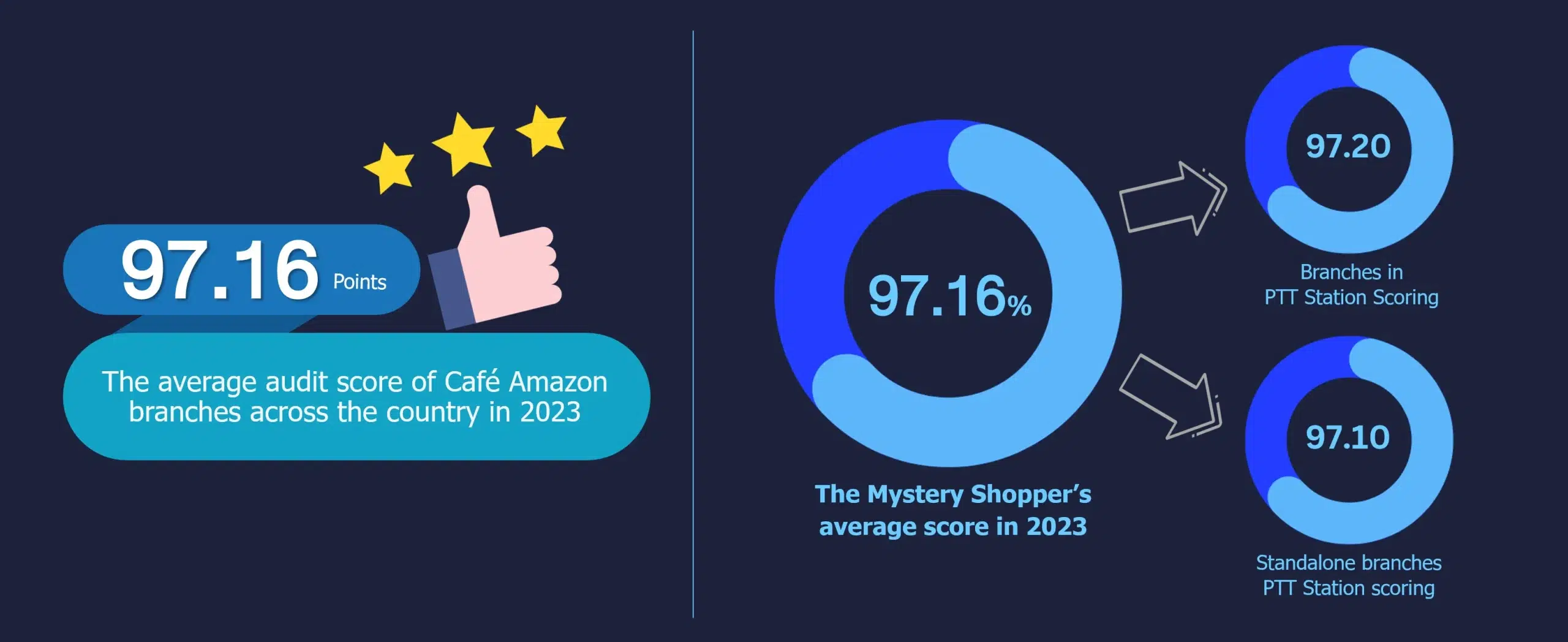
Throughout 2023, Café Amazon audits were completed and included: Standard Audits (Quality, Service, Cleanliness: QSC) for all 4,045 branches (1 audit/branch/month); Operation Audits (Store Audits) for branches managed by OR, averaging more than 3 audits/branch/year; and Mystery Audits (3rd party) for all branches, except for branches in the three southern border provinces, at a rate of three audits/branch/year. Overall, 4,045 Café Amazon branches were audited at least once a month, representing 100% of the total number of branches in the country in 2023. The average score of the Standard Audit (Quality, Service, Cleanliness: QSC) for Café Amazon was 97.16 points (97.16%). This is broken down as 97.20 points for branches located in PTT Stations and 97.10 points for branches located outside PTT Stations.
Traceability
OR places great importance in ensuring product safety through the value chain. Our product traceability system allows us to make certain that all product-related activities, from raw material sourcing to production and distribution, comply with relevant standards and safeguard the health and safety of our consumers. If a product is found to be non-compliant to quality standards, whether due to faults at the raw material sourcing stage or distribution, OR will conduct a preliminary inspection at the point of fault and take corrective action immediately. If the faulty product is a main product that affects the distribution to consumers and is likely to have wide-ranging impacts, OR will coordinate with the manufacturer to consider a recall of the whole faulty lot and take corrective actions to complete needed improvements.
OR’s PTT Station business has quality controls integrated in all oil loading, storage, processing, and distribution processes in the oil terminal, in accordance with our quality control plan (QC Plan), which is comprehensive of activities across oil refineries, oil terminals, and PTT Stations. OR has established oil quality inspection plans for every PTT Station, prescribing that each station is inspected once per year. In addition, OR provides technical services to PTT Station customers who have encountered issues with oil quality at the station, or for end-user customers who have submitted complaints on oil quality at the station via the area manager (AM) or the OR Contact Center 1365 Channel. (The system records the information and monitors progress of resolving the complaint.)
OR operates LPG Cylinder Refurbishing Plants to offer gas cylinder maintenance services in alignment with the Thai Industrial Standards Institute (TISI). The process and cylinder must pass the standard 6 steps quality control and safety measures before being delivered to consumers.
For the Lubricants business, quality control and inspection procedures start from processes to load raw materials and extend towards lubricant product distribution and delivery. OR attaches the batch number to each lubricant batch to allow for tracking and traceability. In case that users have questions or encounter issues when they are using the product, they can notify OR for further investigation. OR will then assign relevant departments to inspect and resolve the issue.
The Café Amazon business has applied quality management system practices by focusing on product quality control from the acquisition of raw materials to the delivery of products to customers. Suppliers of raw materials – such as coffee beans, beverage powder, and milk – are assessed on their production site and product quality prior to selection and signing. Supplier production processes must be certified according to the defined standards for each product group, including the ability to produce and deliver products to maintain quality in accordance with the requirements in the Terms of Reference (TOR).
Product Recall Process
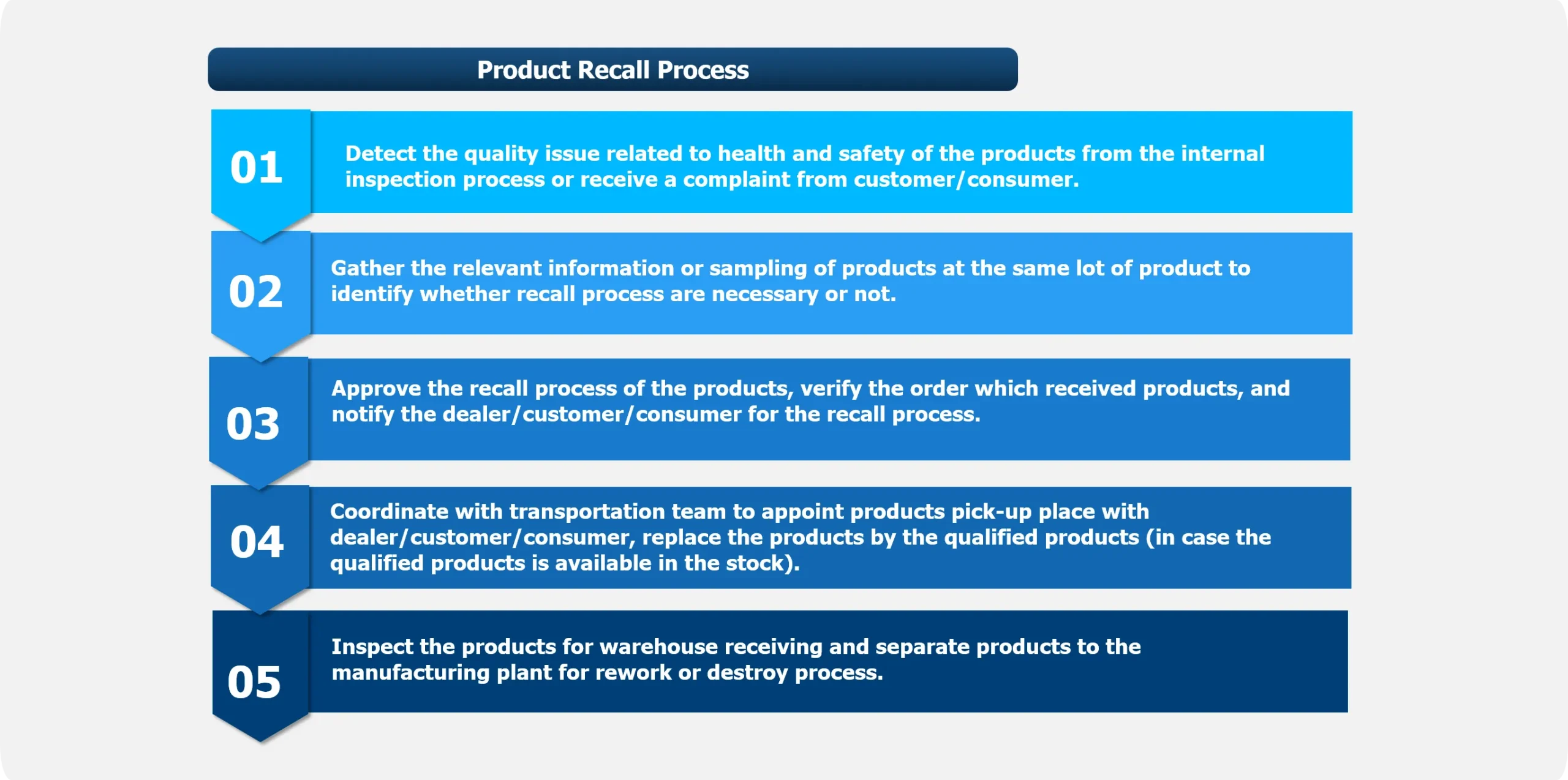
OR has defined procedures for product recall for each business group to ensure that we take responsibility for controlling product quality standards relating to health and safety. OR has clearly defined relevant procedures and approval authorities for the recall process to prevent non-compliant products from reaching end consumers.
Product Recall Result
2020 | 2021 | 2022 | 2023 | |
Number of product lines for which products were recalled | 0 | 0 | 0 | 0 |
Expenses incurred due to recalls issued in the corresponding fiscal year (THB) | 0 | 0 | 0 | 0 |
Revenues (THB) | 432,421,967,997 | 515,744,923,339 | 793,462,675,285 | 774,430,977,776 |
Cost of recalls as a percentage of annual revenues | 0 | 0 | 0 | 0 |
In addition, OR has established complaint channels where consumers can provide feedback and suggestions through the Contact Center 1365 and online social media platforms 24 hours a day. Once OR receives feedback and suggestions from consumers, an inspection is promptly conducted, corrections are made, and the resolution and preventive measures are communicated immediately. This is done to genuinely address and respond to complaints, fostering confidence in consumers or complainants to trust in OR’s products and services moving forward.
Performance
Improving the Quality of Products and Services
PTT Station has reformulated its standard-grade fuels for both benzene and diesel into a new formula called Xtra Save in July 2023 to meet the needs of consumers who focus on saving and caring for their engines.

Café Amazon organized the Café Amazon Barista Championship 2023 at the OASYS Lifestyle Business Center. The objective of the competition is to build barista capacity in terms of quality, skills, knowledge, expertise in using coffee brewing equipment, and ability to make coffee in accordance with Café Amazon’s standards. Additionally, it provides a platform for baristas to create new and innovative menus for consumers.
Healthy Products: As OR’s retail business network is extensive and stretches across the country, we have identified the healthy product market as an attractive opportunity for business expansion, especially considering as the market has seen continuous growth. OR has developed various healthy products, including three different LITE drink menu options that use honey instead of sugar and have been FDA-certified with the “Healthier Choice” label, and four alternative drink options that use fresh milk as an ingredient. In addition, customers are able to choose between four different sweetness levels: 100%, 50%, 25%, and 0%. We have also continued to strengthen our work processes and management to ensure that consumer health and safety always come first. In particular, all bakery products sold in Café Amazon must pass a selection process that considers quality, health, and safety standards of the FDA.

PTT Cooking Gas Business: OR launched the “PTT Cooking Gas” application to facilitate online orders of our cooking gas product. This initiative drives the LPG business forward by incorporating technology to support and enhance services, in combination with further advancements and standardization of management and operational systems for distributors. The system assures gas tank quality through a 6-step safety standard, including sealing a gold seal on each tank. The application also comes with easy-to-use delivery tracking features, allowing shops to manage distribution effectively anytime and anywhere.
OR has also developed new products, and made improvements and raw material adjustments to existing products to address issues experienced by customers.
- Portable Gas Cannisters by PTT Cooking Gas: The product offers a safe, convenient, and travel-friendly solution for all types of users. It is versatile, catering to various applications and suitable for every menu, making it ideal for campers or those who prefer compact and portable stoves. This canister is easy to carry, space-saving, and suitable for diverse uses. It offers easy installation and is compatible with portable stoves, making it perfect for grilling, coffee brewing devices, and cooking spray heads. Enhanced safety features include the triple seaming rim vent release (TSR) system, providing users with top-level safety technology. It comes with a sturdy lid, a three-layer locking system, and a specially designed valve to reduce pressure and prevent explosions. Everyone can confidently use it with peace of mind.
- Thermal Heat Belt: Developed in collaboration with Too Cool Company Limited, the product aims to address the challenge faced by restaurants when the gas cylinders they use have run out of pressure, but there is still remaining gas in the cylinder. The thermal heat belt, once strapped around the gas cylinder, will add heat to the cylinder, thus increasing the pressure and allowing the remaining gas to be extracted. The product is specifically designed for 48-kilogram gas cylinders, and has been certified explosion-proof with the EX ec II C T4 Gc standard, demonstrating that it has the utmost safety assurance.

Lubricants Business: PTT Lubricants has developed DYNAMIC ADBLUE, a high-quality diesel exhaust fluid (DEF) product designed for modern and clean diesel engines that use Euro 5 and Euro 6 technology and employ catalytic reduction (SCR) for exhaust gas treatment systems. The product, manufactured with rigorous production methods that align with international standards and minimize contaminants, consists of high-purity urea and is particularly effective in reducing the release of nitrogen oxides (NOx) emissions.
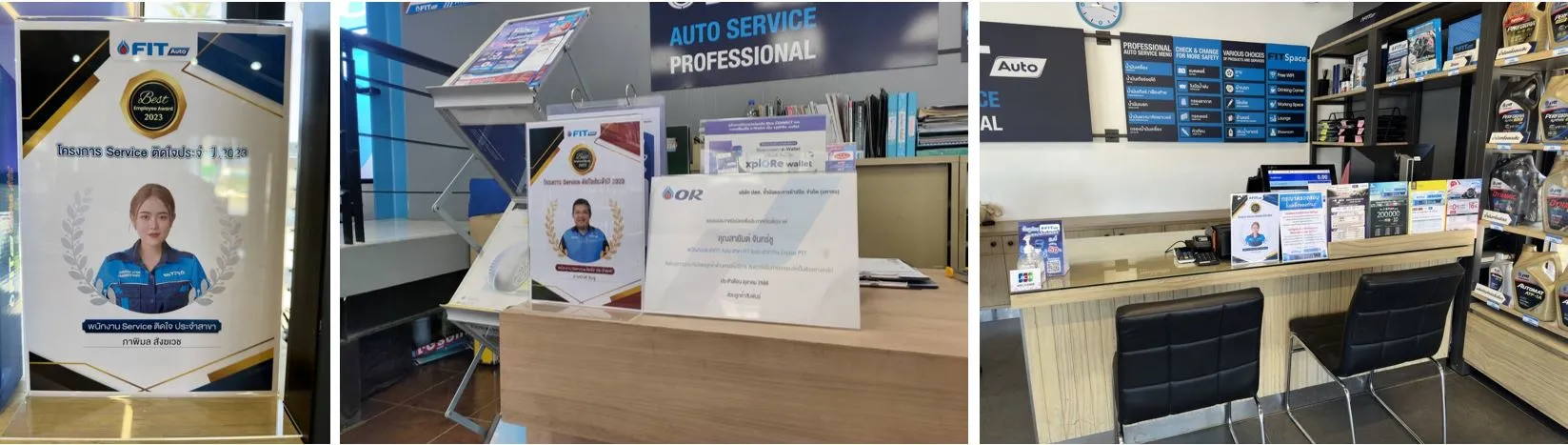
FIT Auto has initiated the “Service Tid Jai” program to promote excellent service center standards that exceed customer expectations and elevate customer satisfaction. The program consists of employee recognition initiatives that highlight and celebrate employee successes in customer service, also symbolizing OR’s gratitude for our people’s exceptional efforts that go beyond organizational expectations. Selected employees are awarded with certificates of recognition and video clips. This program serves to increase employee engagement, boost motivation, and drive them towards achieving organizational goals, thus contributing to long-term improvements in customer service.