- Home
- >
- sustainability
- >
- Sustainability Policy and Strategy
Sustainability Development Policy and Strategy
OR Sustainability
OR has established OR strategic framework under the vision of “Empowering All Toward Inclusive Growth: OR Fulfilling Opportunities for Growth Together ” by incorporating key organizational issues as part of the information used in determining the organization’s strategy. This is with the intention of operating a business that always believes in the opportunity for growth and leading to success, as well as the opportunity to grow towards a good quality of life, and to grow together in an abundant environment. OR’s strategic framework for business operations therefore places emphasis on environmental responsibility, social, and economic development to create balanced value to stakeholders. OR has set OR 2030 Goals aligning with our strategies covering operations in 3 dimensions: Planet, People, and Performance as follows:

In addition, in 2023, OR conceptualizes sustainable future through OR’s SDGs to enhance opportunities to grow together with communities, economy, and society to effectively target OR 2030 goals. The OR SDGs consist of:
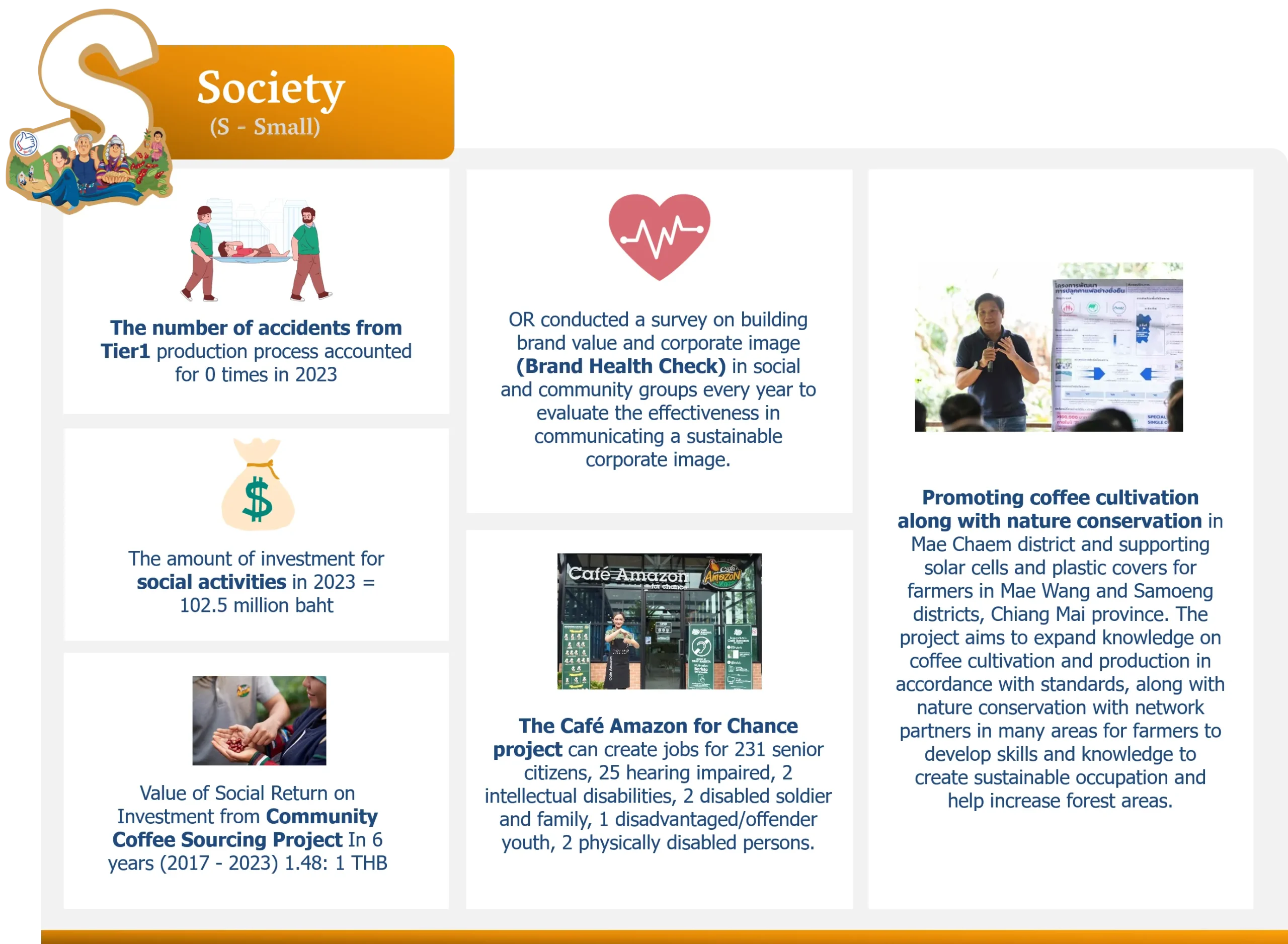
S – SMALL (Opportunities for Communities)
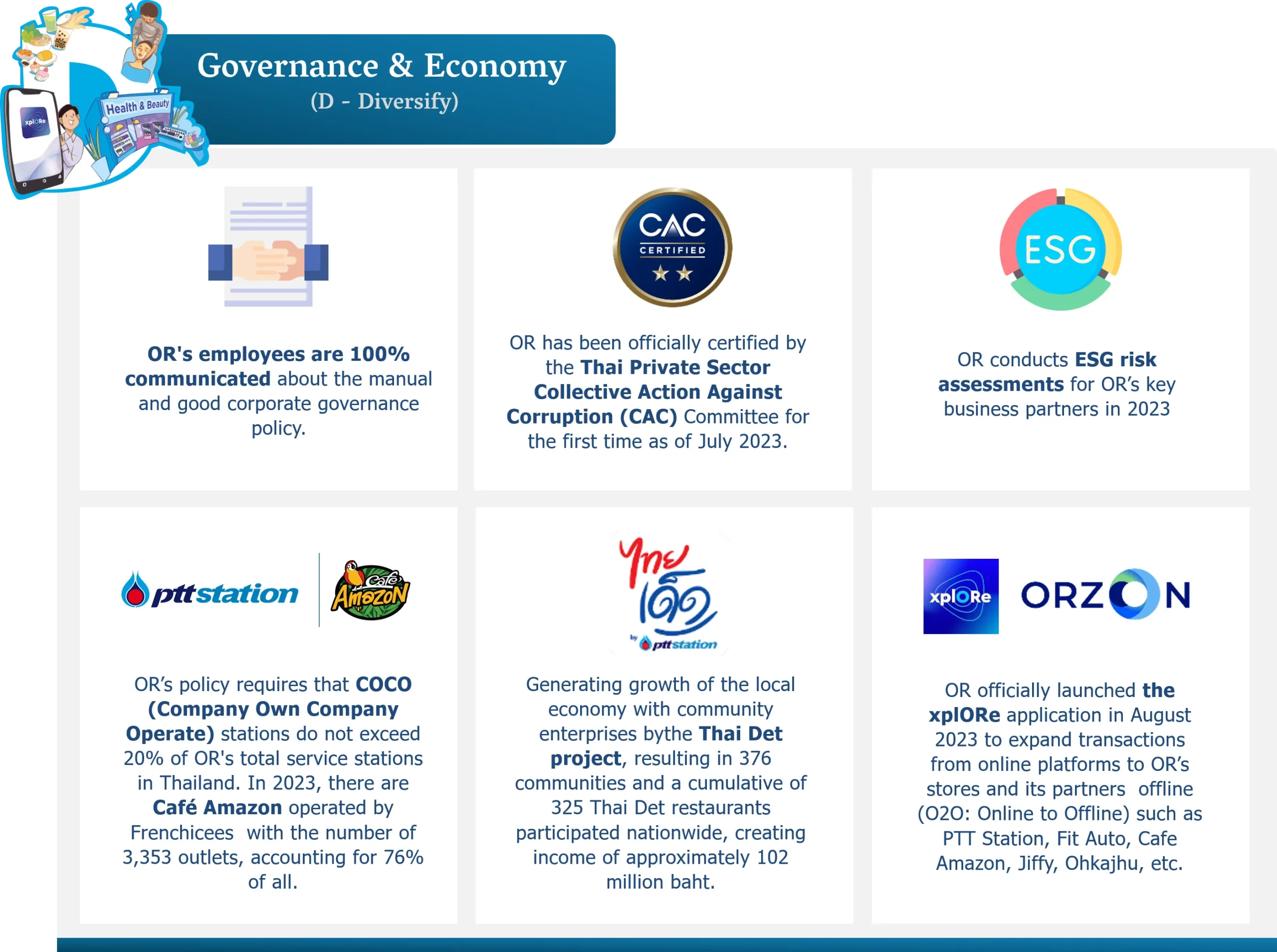
D – DIVERSIFIED (More Products and Services)
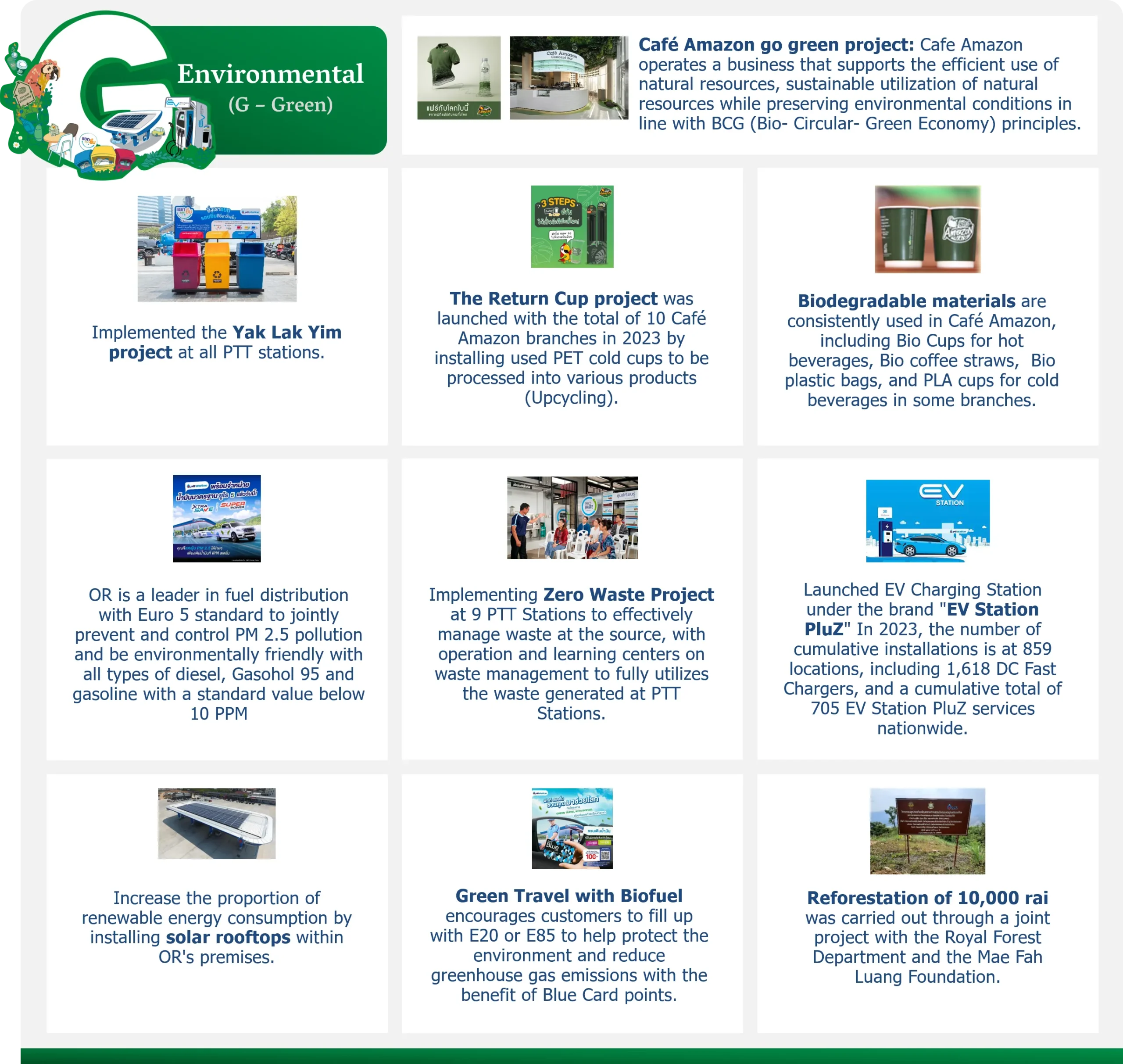
G – GREEN (Low Carbon Business Areas)
OR Sustainability Management Structure and Guidelines
OR established Sustainability Management Policy as a framework for sustainable operation of the organization. This is to achieve the targets to operate transparent business, comply with relevant laws, raise sustainability awareness among stakeholders throughout OR’s value chain, promote innovation and technology development, and enhance the quality of life of communities. OR therefore established the Sustainable Development Committee chaired by the Senior Executive Vice President of Corporate Strategy and Sustainability, and includes executives from all business units joining the committee. The committee is responsible for approving OR’s strategic plans, sustainable business plans, and action plans, which must adhere to PTT Group’s policies, national and international corporate sustainability management standards; approving and reviewing OR sustainability material issues and encourage relevant business units to support the operations in according to the sustainability strategy, consideration and approving on OR Sustainability Report and reporting the progress of OR Sustainability Report to the OR Management Committee (ORMC) and the OR Corporate Governance and Sustainability Committee (ORCGS) quarterly. In addition, OR assigned Sustainability and Quality, Safety, Health and Environmental Department to be the main department to drive the OR corporate sustainability programs.

Sustainability Strategy
OR defined sustainability strategies to ensure stable and sustainable growth of the organization by considering society, community, and environmental resources, as presented below:

Healthy Environment – operates with awareness of the environment’s importance and considers the use of resources for the most cost-effective and efficient manner.
Carbon Neutrality Target by 2030 and Net Zero Carbon Emissions by 2050
- Responsible Production and Consumption: Promoting production and consumption that take into account the entire value cycle, from the initial production process to post-consumer waste management and consumption.
- Reduce the amount of each type of waste, namely Operation Waste, Packaging Waste and Food Waste.
- Hazardous and non-hazardous waste disposal by zero to landfill concept
- Energy and Utilities: The use and development of energy and public utilities that are friendly to both people and the environment.
- Increase energy efficiency by 1/3 within 2030 by reducing energy consumption, enhancing energy efficiecy, and increasing the use of renewable energy in facilities. For example, installing solar rooftops with a target of 20.044 MWp by 2030.
- Climate Change: Prioritizing the reduction of greenhouse gas emissions to mitigate climate change.
- Reduce greenhouse gas emissions by supporting the use of renewable energy.
- Carbon absorption by planting 10,000 rai of forests by 2030
Living Community – recognizes the importance of all groups of stakeholders by creating opportunities and equality while enhancing the quality of life of society and community
The goal is to improve the quality of life of communities covering both business areas and communities surrounding the business areas > 17,000 communities, or more than 12 million people.
- Living Standard and Community Development: Supporting the sustainable livelihoods of stakeholders in the community, maintaining standards, and ensuring continuous development.
- Social Return on Investment (SROI)
- Health and Safety: Taking care of the health and safety of stakeholders both within and outside the organization, arising from business activities, both directly and indirectly.
- Zero accident that leads to stopping of work
- The number of people who have improved hygiene and safety in the OR business.
- Social License to Operate: Building trust in the community to gain acceptance, collaboration, and brand support for various activities.
- Net Promotor Score – at excellent level
Economic Prosperity – commercial business operations that create business growth and distribute stability to stakeholders such as suppliers, shareholders, small entrepreneurs, employees and communities.
The goal is to enhance growth, careers and distribute wealth to > 1,000,000 of suppliers, shareholders, SMEs, and employees.
- Wealth Distribution: Elevating the economy and fostering growth through income distribution to the community, encompassing employment opportunities, support for various products or services, and community development to transform the area into an economically attractive region, etc.
- Income received per person by suppliers and employees.
- Innovation and Technology for All: Promoting innovation and technology that addresses diverse needs and incorporating them into business operations, as well as enhancing the quality of life.
- The number of consumers using OR’s Digital Platform reaches 14 million by 2030.
- The proportion of suppliers that utilize OR’s Digital Platform or Digital Solution reaches 100% by 2030.
- Collaborativeness:Collaborating with stakeholders to achieve inclusive growth for people in the ecosystem, both in the short and long term.
- The proportion of OR’s total operating results from partners (companies in which OR invests) is more than 50% by 2030
Corporate Sustainability Management Guidelines
OR identifies key corporate sustainability issues to determine the direction to drive the organization towards sustainability and integrate sustainability strategies in the operations of all business units along with raising sustainability awareness among employees, dealers, and partners.
In 2023, OR revises, re-identifies, and prioritizes key corporate sustainability issues by considering both global sustainability trends and the projected impact to stakeholders from OR’ s activities, as well as the financial impact of OR’s activities from various issues. This is based on interviews with key stakeholders to determine sustainability management guidelines. In addition, the performance monitoring process is conducted to review each material issue’s target. Finally, the results are presented to executives of all business units regularly for continuous improvement.
OR's Outstanding Sustainability Performance in 2023