Important
From a survey of more than 19,500 employees across the Asia-Pacific region conducted by the consulting company PricewaterhouseCoopers (PWC) in 2023, it was found that the businesses are continuing to face challenges and uncertainties in their workforce management. The satisfaction rate in the workplace is still at a low level, with only 57% of employees who participated in the survey expressing satisfaction with their work at a moderate to high level. The percentage of employees considering changing jobs has increased compared to the previous year, with 30% of people expressing a desire to switch jobs. PwC concludes from the survey that the ‘Great Resignation’ phenomenon in Asia-Pacific is still present, and businesses must be prepared to adapt their organizations to retain employees and maintain business competitiveness.
For OR, employees constitute a significant stakeholder group. We recognize that we cannot achieve organizational goals, whether they are related to innovation, business development, or sustainability, without our people. Therefore, OR places importance on creating a human resource management strategy that meets the needs of employees, in terms of living standards and career progression standards, as well as the development of skills that contribute to the growth of both employees alongside the organization.
2566 Target
* Target 78% (comparable to the Top Quartile level in the same industry group) by 2027
Management Approach
In an era where businesses are filled with constant changes, employees within an organization are considered a crucial factor in driving the business to achieve its set goals. OR is steadfast in operating according to the OR DNA principles. OR believes in the potential of our employees, empowering them to make decisions and propose solutions. The Company has developed human resource policies that focus on building employee capacity to adapt to changing business contexts. Furthermore, OR places importance on gender equality and does not discriminate against its employees. The hiring process is transparent and fair, pushing employees to progress and grow in their careers. In cases of vacant positions, OR considers internal employees first and may seek mid-career professionals externally to fill positions that cannot be filled internally in time for the Company’s needs.
Human Resource Management Strategy
The human resource management strategy of OR is centered around instilling organizational values under the OR DNA framework and preparing personnel to drive the organization towards business objectives. This involves considering the organization’s strategies and goals, evaluating employee readiness, and strategically planning workforce capacity through Strategic Workforce Planning to attract capable individuals to the organization while retaining existing employees. This comprehensive approach includes:
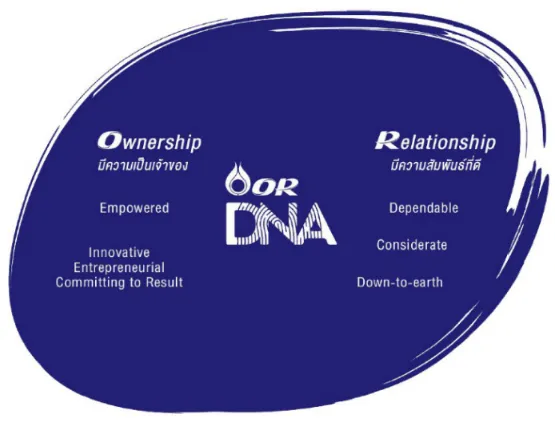
Ownership Aspects
- Empowered Executives trust in employee potential, encourage them to initiate new projects, assign challenging tasks, and are open to listening and giving advice. Executives empower employees to make decisions on their own, according to the situation and conditions, and help them accept and learn from their mistakes, which lead to correction and prevention of recurring mistakes.
- Innovative Entrepreneurial Committing to Result There is a spirit of shared ownership and commitment to work. OR utilizes technologies in work processes to increase efficiency, meet the needs of consumers, seek new business expansion opportunities, as well as create commercial innovations that address stakeholder needs, and help solve important issues regarding society, communities, and the environment. OR is committed to achieve results through professionalism, entrepreneurship, creativity, and a clear direction consistent with the business operations of the organization.
Relationship Aspects:
- Dependable: Be dependable and capable people for fostering in others a sense of trust and confidence in their professionalism, sincerity, honesty, and insistence on doing the right thing even confront of various pressures and consequences.
- Considerate: Be caring and think for others by building and maintaining good relationships with all internal and external stakeholders to achieve mutual success.
- Down-to-Earth: Be ready to listen and respond to the expectations and stakeholder needs with great commitment.
Promoting Equality and Diversity within the Organization
OR strives to ensure that recruitment and interview processes are transparent, non-discriminatory, and supports equal opportunity, and actively promotes diversity. We prioritize internal career advancement through opening up vacancies for internal employees before considering external candidates. Throughout this process, applicants must undergo and pass assessments of their qualifications, potential, competence, ethical work conduct, and alignment with the organization’s values under the OR DNA framework.
Moreover, as an employer, OR conducts continuous efforts to promote equality. Data on managerial positions and wages are collected and categorized by gender to assess equality.
Competitive Compensation and Benefits
Competitive compensation and benefits are crucial factors in attracting and retaining skilled employees. OR consistently reviews and updates employee compensation to ensure it reflects current economic conditions, is competitive with leading companies in the same industry, and aligns with organizational context, such as financial performance and/or any internal changes. We consider if current employee compensation is a fair reward for the expectations of that particular position, particularly the level of difficulty and the surrounding working conditions, and employees’ knowledge and expertise. Importantly, OR monitors compensation closely to maintain it at higher levels than the living wage, ensuring that our compensation package enables employees to sustain a livelihood for themselves and their families. To that end, OR has signed a commitment to complete an assessment of the living wage for all employees, reiterating our promise that all employees must receive payments of living wage.
Beyond ensuring compensation that covers the cost of living, OR’s employee benefits are at a level that can retain skilled employees and support them in taking care of their families. Furthermore, OR provides various benefits to employees, detailed as follows:
Benefits | Full-time Employees |
| Annual health check-up | ✔ |
| OR Happy Healthy Mind, a mental health counselling service for employees | ✔ |
| Life insurance | ✔ |
| Health insurance | ✔ |
| Health insurance for family members (limited to 4 people) | ✔ |
| Annual leave | 10-15 วัน |
| Maternity Leave) | 98 วัน (paid) |
| Parental Leave | 15 วัน (paid) |
| Family leave | 10 วัน (paid) |
| Breastfeeding rooms are available for female employees to use during work. | ✔ |
| Scholarships for employees’ children | ✔ |
| “Day Care” area, where nannies are hired to take care of employees’ children at the office | ✔ |
| Flexible Working Hours | ✔ |
| Work from Home | 2 days per week |
| Flood Financial Aid, a special home repair benefit for employees whose homes were damaged by floods | ✔ |
| Provident Fund | 10 – 14% according to length of employment |
| Activities to support employees in preparing for retirement, such as training sessions on personal finance, investment, health, and ways to adapt for changes in social life, which are offered 3 years prior to expected retirement, | ✔ |
Note: 1. OR does not hire part-time employees. | |
Furthermore, OR has appointed a Welfare Committee to serve as employee representatives in providing advice, suggestions, opinions, and guidance on the development of employee welfare programs that reflect employee needs.
Employee Development
OR supports the development of employee potential through a comprehensive process, beginning with evaluating the responsibilities of each position within various job categories to identify core competencies and the career path for each role. This process is essential to align the work with the organization’s strategic goals. The organization prepares employees for professional growth and then aligns this with the organization’s values (OR DNA) to determine the necessary skill set for employees in each job category. Annually, supervisors engage in two-way discussions with employees to discuss their responsibilities for the upcoming year. Progress is monitored at mid-year and year-end, comparing it against the core competencies outlined by OR. This assessment helps identify areas for skill development. Simultaneously, employees have the opportunity to communicate their personal development goals. The results of this assessment form the basis for individual development plans (IDP), aiming to track and guide each employee’s professional growth. More information can be found on the website at the following link: Click
OR will gather the results from the Individual Development Plans (IDP) of employees to analyze training and development needs for the upcoming year. This includes conducting a Training Need Survey to collect additional information about employees’ needs or interests that may not be specified in the IDPs. In addition, OR surveys function-specific needs through the ‘Get Requirement Training Need Survey’ for the Functional Program, and defines QSHE training needs based on the relevant policies provided by the Sustainability and Quality, Safety, Occupational Health, and Environment (QSHE) function. Depending on each function’s strategic priorities, OR also develops ‘Fundamental’ training courses. This is sent for approval before development of the specific course and activity for the following year. Training courses are divided into three categories:
- Core Competency courses that target development of Business Leadership and Soft Skills
- Functional courses tailored for each function’s specific needs
- QSHE courses, including three groups:
- 3.1 Courses on laws, regulations, and licenses
- 3.2 Courses on OR policies and strategies
- 3.3 Courses to build awareness and strengthen skills.

OR assesses employee skills to benchmark and evaluate the existing skills of employees and areas where improvement is needed. This assessment informs the identification of the training needs of employees through a Training Need Survey.
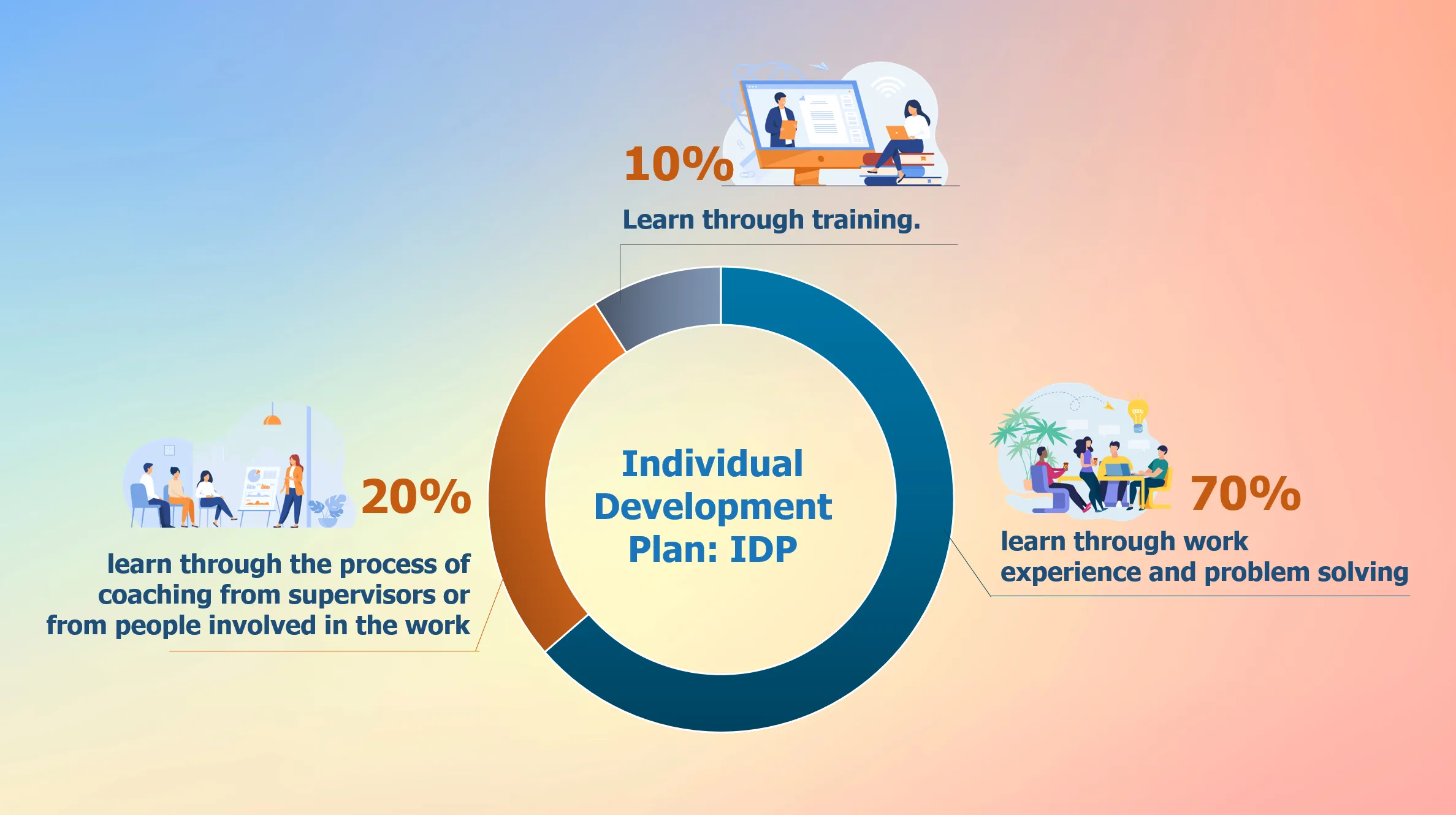
OR utilizes a learning and development model known as 70:20:10, which is structured as follows:
- 70% is learned through hands-on experience and problem-solving,
- 20% is learned through coaching processes from supervisors or relevant individuals in the workplace,
- 10% is learned on-the-job.
In 2023, 100% of the total employees have completed performance evaluations and personal development planning.
Furthermore, OR has defined our organizational mission, vision, and business strategy to create opportunities for shared growth, one of which is to drive and expand our international business portfolio to achieve success and recognition in the global market. In order to achieve this goal, it is crucial that we secure talent with the capacity and readiness to work internationally. In light of that need, OR launched the Overseas Pool Project to provide opportunities for employees to develop their knowledge, skills, expertise, and experience in working abroad. Interested employees can apply and undergo a selection process.

As part of the Overseas Pool Project, OR organized the OR Overseas Pool Leadership Bootcamp 2023 for employees accepted into the program. The Bootcamp included the ‘Global Leadership with Innovation’ course which targeted leadership skills, and the ‘Leading with a Global Mindset’ course which targeted soft skills, focusing particularly on skills related to communication design, working in a cross-cultural workplace, and embracing uncertainty. Employees are encouraged to apply the knowledge and skills gained in their current work and to prepare for international assignments.
Furthermore, there is the Company Management Program, a course that focuses on developing skills and knowledge in business, finance, corporate governance, ethical leadership, and legal responsibilities. The program aims to instill ethical responsibilities in employees who take on executive or board positions, as well as those working on secondment within the OR group, both domestically and internationally. The training covers the following topics:
- Leading with Purpose
- Business and Legal issues for directors and executives
- Strategic Leadership
- A Practical Guide to GRC Integration / OR GRC
- Managing Risks and Seizing Opportunities
- Finance for Corporate Leaders
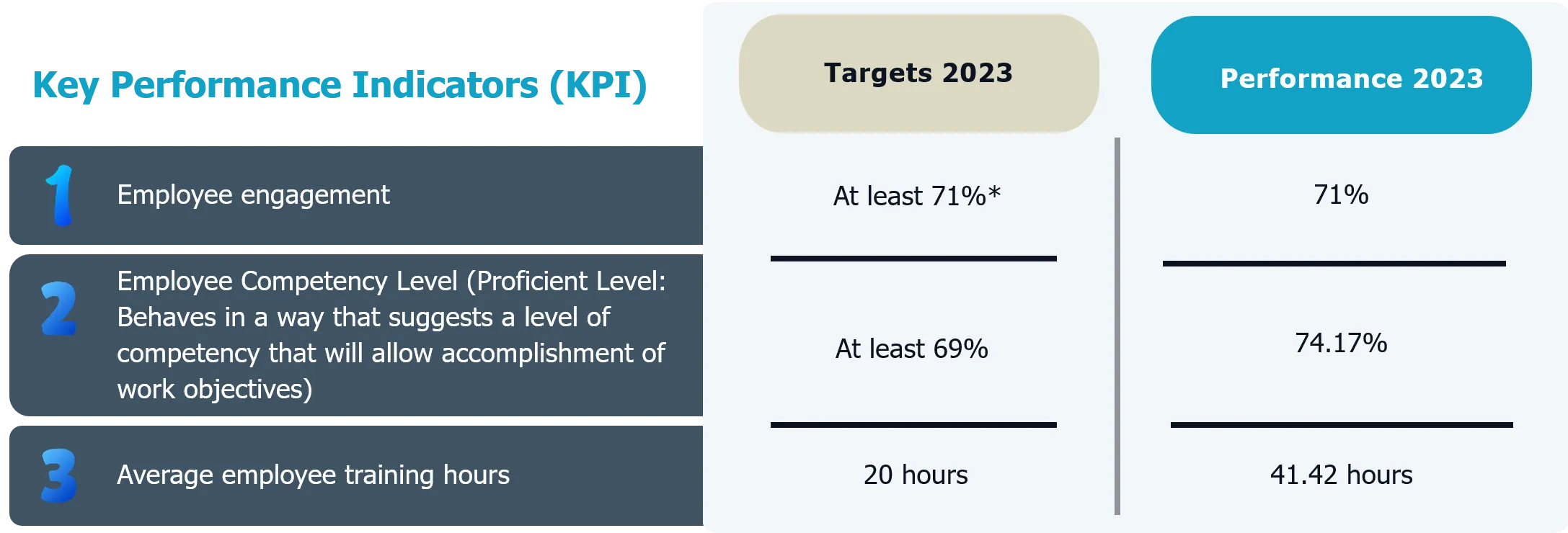
To ensure the most effective development of human resources, OR has linked the OR DNA to employee development by defining competencies, which help drive future-oriented business changes, leading to development and job rotation based on the Success Profile. This involves systematically developing competencies and experiences along a career path and linking them to professional Key Performance Indicators (KPIs), including Working KPIs and Behavior KPIs that reflect behavior at work in line with OR DNA. OR has established Working KPIs that align with the organization’s long-term objectives and goals, reflecting the OR DNA culture in fostering ownership, building good relationships with internal and external stakeholders, and sustainable mutual growth. This aligns with the organization’s vision, mission, and strategic direction, aiming for a Triple Bottom Line business approach that prioritizes People, Planet, and Performance in a balanced manner. In 2023, various KPIs were defined to reflect the Company’s commitment to these principles, including:
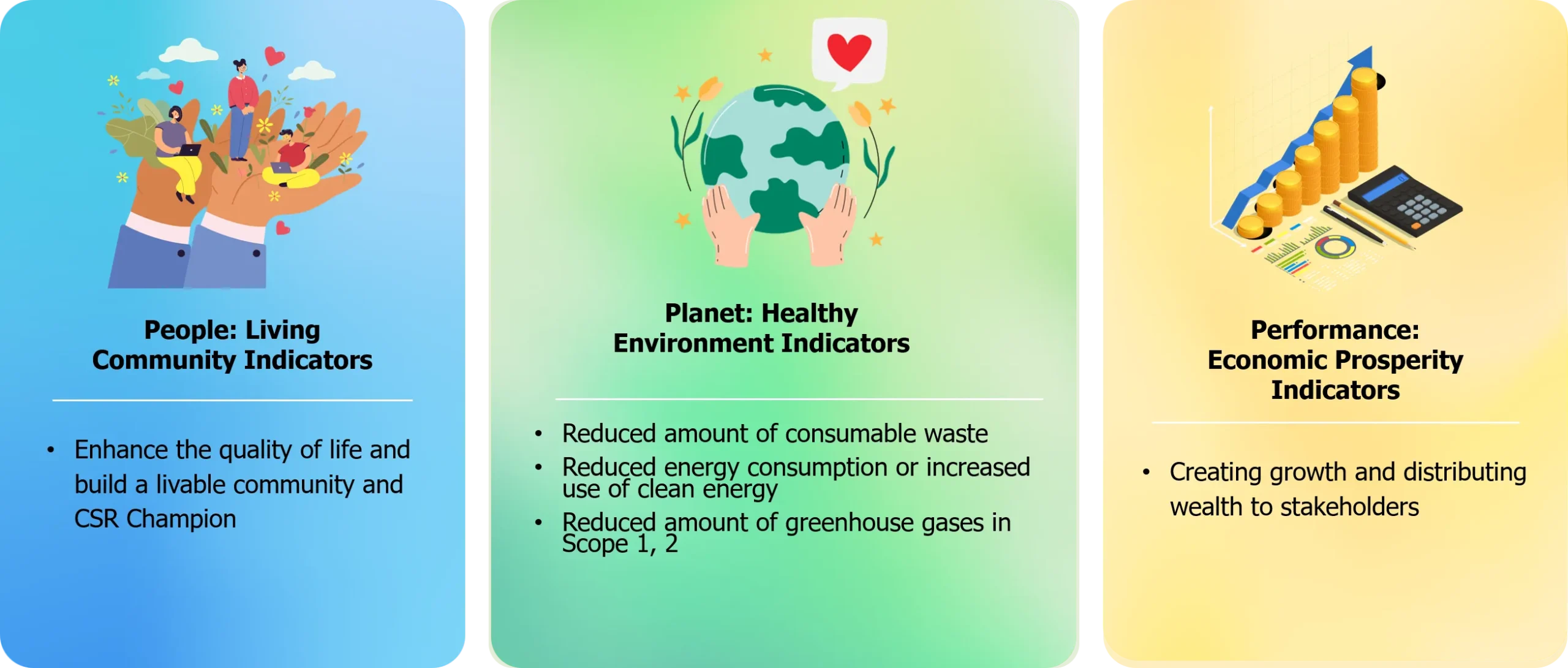
OR regularly follows up on and evaluates employee performance. The results of the evaluation of these KPIs will be used to determine suitable and fair remuneration for employees in the form of long-term compensation, including annual salary increases, and short-term remuneration, including annual bonuses.
Succession Planning
OR systematically determines succession plans for key personnel and assesses leadership potential, organizational management capacity, and level of experience to formulate plans and programs to develop employee readiness to support business growth and change. In order to ensure continuity in the Company’s operations, both domestically and internationally, those who are selected to be successors will be trained systematically to ensure their readiness to fill the position at the time needed. The management succession is planned for the different position levels according to 5 groups as follows:
- Chief Executive Officer
- President
- Senior Executive Vice President
- Vice President
- Manager
Potential successors are considered according to the needs of the organization for the next five years. Potential executives are trained through the potential employee development program to prepare them to be able to lead the organization with knowledge and experience, as well as adaptability for rapidly changing business situations and environments and readiness for business competition in the future. Furthermore, there are transfer plans to develop competencies and accumulate necessary experience before the successor can take over the position. This is to ensure that the selected executives will have the necessary knowledge, abilities, experiences, and can be a good role model under the OR DNA work culture.
Nomination of Chief Executive Officer
For Chief Executive Officer nomination, the Nomination and Remuneration Committee proposes qualified candidates with knowledge, experience, competency, desired characteristics, and leadership to the Board meeting for approval and subsequent appointment per the procedure and method required by relevant laws and regulations, for example, Public Companies Act B.E. 2535, Securities and Exchange Act B.E. 2535 and the announcement of the Securities and Exchange Commission regarding determination of untrustworthy characteristics of company directors and executives, etc. The nomination process must be transparent and fair. For more information please see the Announcement: Recruiting the position of Chief Executive Officer, PTT Oil and Retail Business Public Company Limited.
Promoting Knowledge to Suppliers and Their Employees
OR places great importance on developing and transferring knowledge and systematic business practices to its employees as well as business partners, ensuring that all relevant personnel are competent and capable of performing their duties according to OR’s operational standards. To fulfill this commitment, OR has established the OR Academy Department, responsible for developing and implementing training courses that align with the organization’s policies, business strategies, and the needs of individuals within the business network and relevant external parties involved in business with OR. The OR Academy Department plans training courses related to safety compliance as required by law (QSHE Training). The training is categorized into 11 groups, as follows:
- Business administration
- Managing and developing employee skills
- Marketing
- Law
- Finance and accounting
- Engineering and construction
- Standards of operations
- Quality, Occupational Health and Safety, and Environment
- New businesses and products
- Digital and technology
- Others
In order for the operations of suppliers and their employees to proceed efficiently and in line with OR standards, OR Academy provides mandatory training courses for individuals within the business network and external individuals associated with conducting business with OR. These courses are divided into two groups:
- Courses required by law, such as courses for service station operators, operators of facilities for storing oil, operators in retail outlets and facilities for storing liquid petroleum gas. This also includes courses for operators of liquid petroleum gas filling stations, basic and specialized hazardous materials transportation courses, and IMO Oil Spill Level 3 Response Management courses.
- Knowledge enhancement courses for improved efficiency in businesses related to OR, such as technical sales and service management according to the standards of automotive service centers, courses for managers of under-construction gas stations, courses for managers of gas station forecourts, alternative energy courses, and sustainable market development strategies for lubricant distributors.
In addition, OR Academy Department (Department of Leadership and Business Development) is responsible for managing the operations of two training centers, namely:
- OR Academy Training Center, Wang Noi, Ayutthaya Province: This Center is equipped with training rooms, meeting rooms, accommodation facilities with entertainment rooms and fitness centers, a football field, and simulation rooms both inside and outside the building.
- Basic Firefighting and Oil Spill Response Training Center, Saraburi Province: This Center specializes in QSHE (Quality, Safety, Health, and Environment) training and is equipped with office buildings, training rooms, firefighting fields, oil spill training areas, and defensive driving training grounds. It also facilitates study tours and supports the organization’s KM (Knowledge Management) policies.

(For more details about OR Academy, please visit: OR Academy Website at : https://oracademy.pttor.com/Home)
Organizational Culture and Employee Engagement
OR establishes an organizational culture and promotes employee engagement through continuous communication and various relationship-building activities. OR develops and disseminates media related to the organization’s values, such as the OR DNA Culture Guidebook. New employees undergo training on OR DNA, and regular updates and information are communicated through email, Line groups, and the intranet. Furthermore, events like CEO meetings with employees and deputy executives’ interactions with staff are organized for close communication. In terms of activities, there are annual outings, team-building activities within departments, and family day events to foster good relationships among executives, employees, and their families, creating a sense of being one big family. Outstanding employees are recognized and rewarded, and commemorative gifts are given to employees who complete designated service milestones (10/15/20/25/30/35/40 years) with the budget as approved by the Company’s board to acknowledge their dedication and commitment to the organization over the years.
Performance
Employee Training Programs
With the average training target of 20 hours per person in 2023, OR has conducted a total of 78,990 hours of training, averaging 41.42 hours per person. The training covered the following topics:
|
Topic |
Course |
Objectives |
Outcome |
|
| International Business Management | OR Overseas Pool Bootcamp | To develop soft skills for working abroad | Employees possess a strong understanding of OR’s business direction and global trends. They have enriched their knowledge and soft skills, such as managing diversity and inclusion, cross-cultural communication, tenacity, uncertainty, and empathy, and are able to apply these skills to their current work and international assignments. The satisfaction score for the training courses among employees is 4.74 out of 5. | |
| The Next Trend in Global Startup | To build understanding in: 1.Business Outlook, Investment Trends, and Landscape of Venture Capital and Technology investments in each region 2.VC101 and Overview: Basic knowledge of venture capital (VC) and corporate venture capital (CVC) 3. Guidelines and techniques for creating corporate venture capital and venture builder for international organizations. | Employees who attended the training demonstrated a solid understanding and knowledge aligned with the specified objectives, covering both VC Landscape and key trends. They gained insights through presentations on best-in-class CVC practices, emphasizing the significance and strategies for establishing and operating CVC within the organization. Additionally, they acquired an understanding of innovation creation within the organization, or venture building, through examples of global best-in-class VB. The training featured presentations by international experts with direct experience in managing corporate venture capital (CVC). These experts shared in-depth experiences and insights, providing OR employees with practical knowledge that can be applied in their work. The average satisfaction score of employees towards the training programs is 97.64% | ||
| Sustainability and ESG | Green and Sustainable Finance | To be able to classify and distinguish the mechanisms and financial instruments that support GHG emission reduction projects or environmentally friendly projects; to apply knowledge in managing funding sources or take advantage of the mechanisms of green and sustainable finance to maximize benefits for the Company; and to be able to utilize existing green finance tools to extend positive impacts to OR stakeholders. | After training, participants had an average test score of 73%, showing an improvement of 36.5%. Regarding the classification of financial mechanisms and tools supporting GHG emission reduction projects. They have acquired a deeper understanding of leveraging green and sustainable finance mechanisms to maximize benefits for the organization, as well as utilizing existing tools in green finance to extend positive impacts to OR stakeholders. | |
| Carbon Footprint & Carbon Credit | To provide knowledge about the carbon credit market conditions with the goal of reducing greenhouse gas emissions for environmental sustainability | Employees who are engaged in or affiliated with relevant units have acquired increased knowledge and can apply this knowledge to develop business in the carbon credit market. This enables employees to contribute to supporting OR’s carbon neutrality goals by offsetting greenhouse gas emissions. They are also capable of studying the strategies involved in buying, selling, and trading carbon credits in the business context. After training, participants had an average test score of 89.06%, showing an improvement of 52.13%. | ||
| Corporate Governance and Anti-Corruption | To instill and reinforce a culture of good corporate governance and anti-corruption among employees within the organization | Employees in the organization have gained increased knowledge in areas such as good corporate governance, anti-corruption, and conflict of interest, and the No Gift Policy. These are crucial principles that can be applied to carry out organizational tasks correctly. Employees’ knowledge within the organization has an average score of 88.67%, up from the previous average score of 30.47% before taking the course. | ||
| Introduction to Sustainability: Reporting and the GRI Standards | To understand the principles of data preparation and reporting sustainability performance according to the GRI Standards, be able to conduct a self-assessment of alignment with GRI standards in operations, and be able to apply GRI principles to enhance internal organizational processes to meet GRI requirements comprehensively. | Employees have gained increased knowledge and understanding of the key principles in preparing data and developing the sustainability report according to the GRI Standards. This includes the ability to self-assess and apply these principles to improve internal organizational processes accurately and comprehensively. Knowledge of employees who participated in the training had an average test score of 92%, showing an improvement of 47%. | ||
| Data collection and reporting on occupational health, safety, and environmental performance according to GRI principles | To enhance employees’ knowledge and understanding of reporting according to GRI standards. | Employees have Increased knowledge on data preparation and developing the sustainability report in alignment with the GRI Standards. After training, participants had an average test score of 91%, showing an improvement of 39%. | ||
| Company Management Program | To develop essential knowledge and skills for top executives/board members, crucial for carrying out duties in both executive and corporate roles within the OR group, both domestically and internationally. This ensures that operations are conducted in accordance with business principles, ethical standards, and effective corporate governance. | Participants has gained knowledge and understanding of their roles, responsibilities, and ethical obligations in corporate governance. This includes a focus on strategy, risk management, and other essential skills for effective corporate oversight. In 2023, the satisfaction score in this regard is 3.77 out of 4. | ||
| Production Efficiency and Productivity | Practical Training to Increase Efficiency for Lifestyle Business | To enhance knowledge and understanding of productivity improvement tools, enabling the application of this knowledge in the organization’s processes; and to facilitate continuous improvement in organizational processes by significantly increasing productivity | After attending the training, various departments have initiated 6 Productivity Improvement projects as follows:
|
|
| Using QC Tools | To increase employee knowledge and understanding of productivity enhancement tools, and apply the knowledge gained in the processes of their respective departments | Employees can apply tools to enhance efficiency in their work. Before the training, the participants had an average test score of 46.5%. After training, participants had an average test score of 89.3%, showing an improvement of 42.8%. | ||
| Productivity Improvement Awareness: Unlock Your Creativity | To raise awareness in productivity improvement and apply the acquired knowledge to the workflow processes within the organization | Participants gained increased knowledge in productivity improvement and can apply this knowledge in their future work processes. after training, participants achieved an average post-training test score of 9.15 out of 10, equivalent to 91.5% | ||
| Workshop on Monitoring Aviation Fuel Operations | To inform employees about the standards of aviation fuel operations, enabling them to carry out monitoring tasks as assigned; to provide awareness of key recommendations for 2022-2023 from internal, external inspections, and customer feedback | The participants in the training are a group of OR’s aviation fuel operating standards inspectors. They have knowledge and understanding of the standards, operating procedures, various requirements, including Best Lesson Learn from international standard organizations. They are able to perform assigned auditing tasks according to objectives participants had an average test score of 84.7% from the previous average score of 79.4% before the training. | ||
| Data management | Robotic Process Automation (RPA) | To facilitate employee learning about various data processing procedures, such as submitting existing database information to relevant parties via email, in order to ensure accurate decision-making and provide employees with more time for tasks of higher value | Relevant employees have a suitable understanding and capability to apply robotic process automation (RPA) software to assist in data-related tasks. This led to a significant reduction in work time by 73%. (The data is from three activities, including: the Maintenance Dashboard, the Permit Expiry Alert System, and the Tank Level Monitor. All three projects, once RPA was implemented, saw a reduction in working by 1,268 hours, from a pre-training average of 4,670 working hours.) | |
| Marketing | Strategy for creating a Top of Mind Brand | To make employees in related fields aware of the strategy guidelines for creative advertising and public relations work to build the OR brand to be a Top of Mind brand, as well as educate employees basic knowledge in brand building strategies to understand the various elements that support brand building, which can be applied to communication strategy and PR work | Employees have developed more diverse perspectives on Top of Mind brands, drawing insights from various brand case studies in the course. This knowledge empowers them to apply strategies in planning communication, advertising, and public relations to position both the OR brand and product brands as Top of Mind brands. The average satisfaction score of employees towards the training program was 94.78%. | |
| Digital Marketing Strategies for B2B & B2C | To increase employee awareness and understanding of modern marketing approaches and how to use them in combination with traditional marketing techniques; to strengthen employee understanding of changes in products and customer behaviors in both B2B and B2C contexts; and to enable employees to effectively utilize modern marketing tools tailored to the evolving situations and develop marketing strategies accordingly | Employees can understand changing customer digital behavior, both in terms of B2B and B2C, basic principles of digital marketing, and can improve marketing strategies in line with the changing marketing environment. Employees understand modern marketing tools, such as applying data-driven approaches to devise appropriate marketing strategies that are developed based on data. Participants had an average test score of 98.50% from the previous average score of 47.1% before the training. | ||
| Strategic Community Space Management | To enable participants to understand overall elements related to commercial real estate projects and study the guidelines, principles, and knowledge in management, as well as develop skills and to be able to transfer real estate project management skills to meet desired goals | Employees can understand overall elements related to commercial real estate projects, as well as management principles so that real estate project management skills can be transferred to meet desired goals. In this course, participants had an average test score of 91.30% from the previous average score of 73.3% before the training. | ||
| Cogen / Trigen | To increase employee awareness and understanding of relevant information needed to determine appropriate forms of energy production and analyze projects, including topics such as: different types of generators and their advantages and disadvantages, cogeneration and trigeneration systems, factors to consider in determining project feasibility, and lessons learned from past projects | Attendees understand different generation systems, are able to calculate the break-even point of the project, can apply cogeneration / trigeneration solutions to customers, and demonstrate confidence in presenting projects to existing and new customers. Participants had an average test score of 90%. (The average score before the training was 60%). | ||
| Technology | Laws regarding personal data, technology, and innovation protection | To increase skills and knowledge regarding personal information, technology, and innovation protection with new or amended regulations and possible impacts in order to efficiently operate within the organization | Employees who participated in the training demonstrated increased knowledge and understanding of details regarding data protection laws related to personal information, as well as aspects of digital marketing and digital analytics. The training covered laws associated with technology, such as electronic transactions, considerations for UX/UI, and the protection of intellectual property concerning innovations. Additionally, it addressed considerations for software rights with newly established regulations and potential impacts. The aim was to design and develop suitable digital platforms and digital marketing strategies. Participants had an average test score of 87.60 increase in knowledge compared to their initial average score of 39.80% before the training. | |
| Leadership | Core Program – Leadership Development | To develop knowledge and leadership skills of all employees according to the OR Core Competency by job level | Employees of all levels have developed skills through the Core Program. OR systematically assesses participant knowledge to measure the outcome of the training, an average increase in knowledge across all levels. Moreover, satisfaction levels for all courses in the Leadership Development group exceeded 93%, indicating a very high level of satisfaction. | |

Public relations media, marketing training

Public relations media, training tools for increasing productivity
To ensure that OR’s human capital development programs effectively promote learning for targeted employees and truly generates benefits to executives, employees, and the organization, OR monitors program effectiveness through conducting pre- and post-training assessments of participants’ knowledge. In 2023, the average post-training knowledge assessment score was 89.07%, an increase of 37.15% from the average pre-training assessment score.
In addition to the training courses provided by OR to employees, OR also provides financial support to employees for costs related to completing examinations, application processes, and maintaining professional certifications and memberships with professional associations. This allows personnel to enhance their knowledge and potential in their job responsibilities within OR.
Leveraging Technology as a Source of Knowledge for Employees
OR is dedicated to becoming an Innovative Learning Organization and has developed a KM Hub to serve as a centralized repository of knowledge for internal personnel. This is aimed at efficiently managing knowledge by leveraging technology for comprehensive storage of knowledge, both within and outside the Company. The process includes identifying and categorizing crucial knowledge types, facilitating dissemination, transfer, exchange, and practical application. This enables OR’s personnel to apply knowledge in various situations promptly, resulting in effective organizational operations.
OR supports every department in knowledge management and the establishment of communities of practice (CoP), with designated roles and responsibilities, as outlined below:
- Sponsor: Managers are assigned to lead the CoPs; set the vision, goals, and action plans; steer the group towards meeting defined objectives; act as role models; and deliver value to the business or organization.
- Leader: Leaders facilitate the exchange of knowledge in order to support accomplishment of defined objectives, act as role models, and deliver value to the business or organization.
- Facilitators: Facilitators are the central driving force and are tasked with promoting participation and understanding within the CoPs. They push for knowledge exchange, take charge in systematically managing knowledge, support members in accessing and making use of the platform, and assist sponsors and leaders in achieving defined objectives.
- Experts: Experts are individuals who are recognized for their knowledge and expertise in a specific area. Their role is to share and facilitate the documentation of their knowledge and expertise. They also contribute to organizing knowledge systematically, promote the development of best practices, and participate in reviewing and approving the release of relevant knowledge.
- Members: Participants in the community contribute to knowledge exchange, receive knowledge from experts, and apply gained knowledge to expand its impact or enhance its efficiency. Members actively engage in promoting and developing practices to establish best practices within the community.
In 2023, the KM Hub of OR staff was utilized, leading to the exchange of knowledge on a total of 1,429 topics.

The Excellence CoPs competition was organized to select representative CoPs that met the criteria for participating in the PTT Group competition for the year 2023. A total of 18 CoPs participated in the competition.

Type of Performance Appraisal
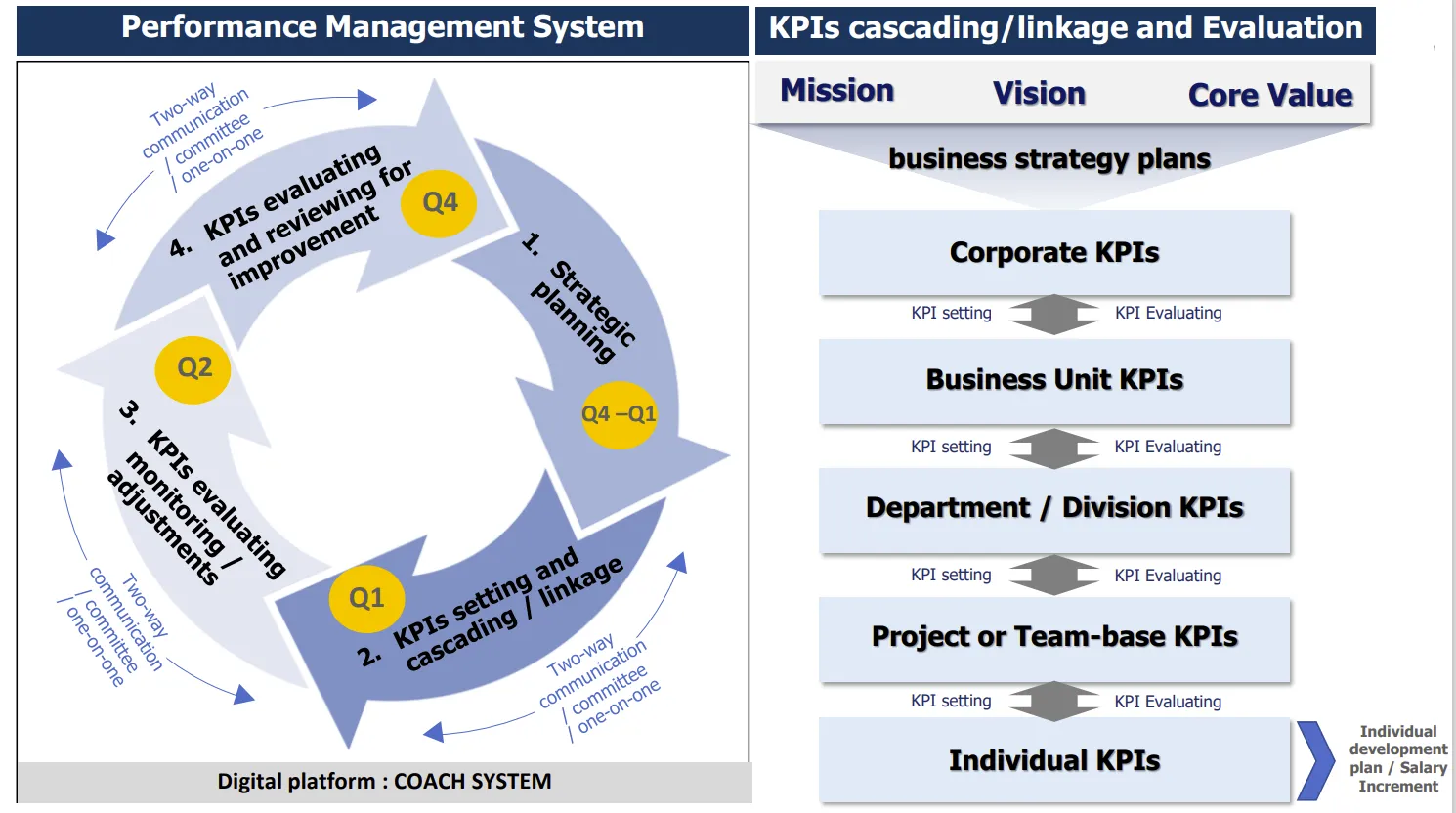
OR has prescribed key performance indicators (KPIs) as an operational guideline for employees to regularly monitor their performance throughout the year against targets in accordance with vision, mission, and business strategy.
Method for Performance appraisal
OR’s business strategy plans set as corporate-level KPIs which cascaded from top to business unit, department / division, project or team-base, and individual-level KPIs respectively. The cascading creates a clear line of sight from top to bottom ensuring all employees are working towards the same objective and goal, which ultimately drive business success. Once those KPIs are in place, OR monitors, evaluates, adjustments made where necessary via COACH system at least twice a year – midyear performance appraisal and annual performance appraisal. Using two-way communication approach, line managers are assigned to support and give employees feedback on their work such as achievements, growth, skills, or lack thereof to ensure progress of their performance throughout the year. At OR, we believe that regular Agile conversations in the form of one-on-one session are important to our employees’ career development. Therefore, we encouraged the feedback session to be conducted as an ongoing basis. Meanwhile, Comprehensive Assessment methods are implemented to measure employee’s performance and results received serve as supplementary data for compensation review to justify pay increases and bonuses as well as identify areas of improvement.
Type and Frequency of employee performance appraisals
Type of performance appraisal | Frequency |
| Management by objectives: systematic use of agreed measurable targets by line superior | At least twice a year Assessment |
| Performance appraisal (e.g. Corporate, Department, Team-based performance appraisal/Project achievement, individual KPI review) | At least twice a year Assessment |
| Multidimensional performance appraisal (e.g. Two-way communication / committee, client’s & related functions feedback (Employee satisfaction)) | Quarterly review: Corporate KPI At least twice a year Assessment |
| Agile conversations (i.e. regular one-on-one session) | Ongoing basis |

Employee Turnover Rate and Engagement
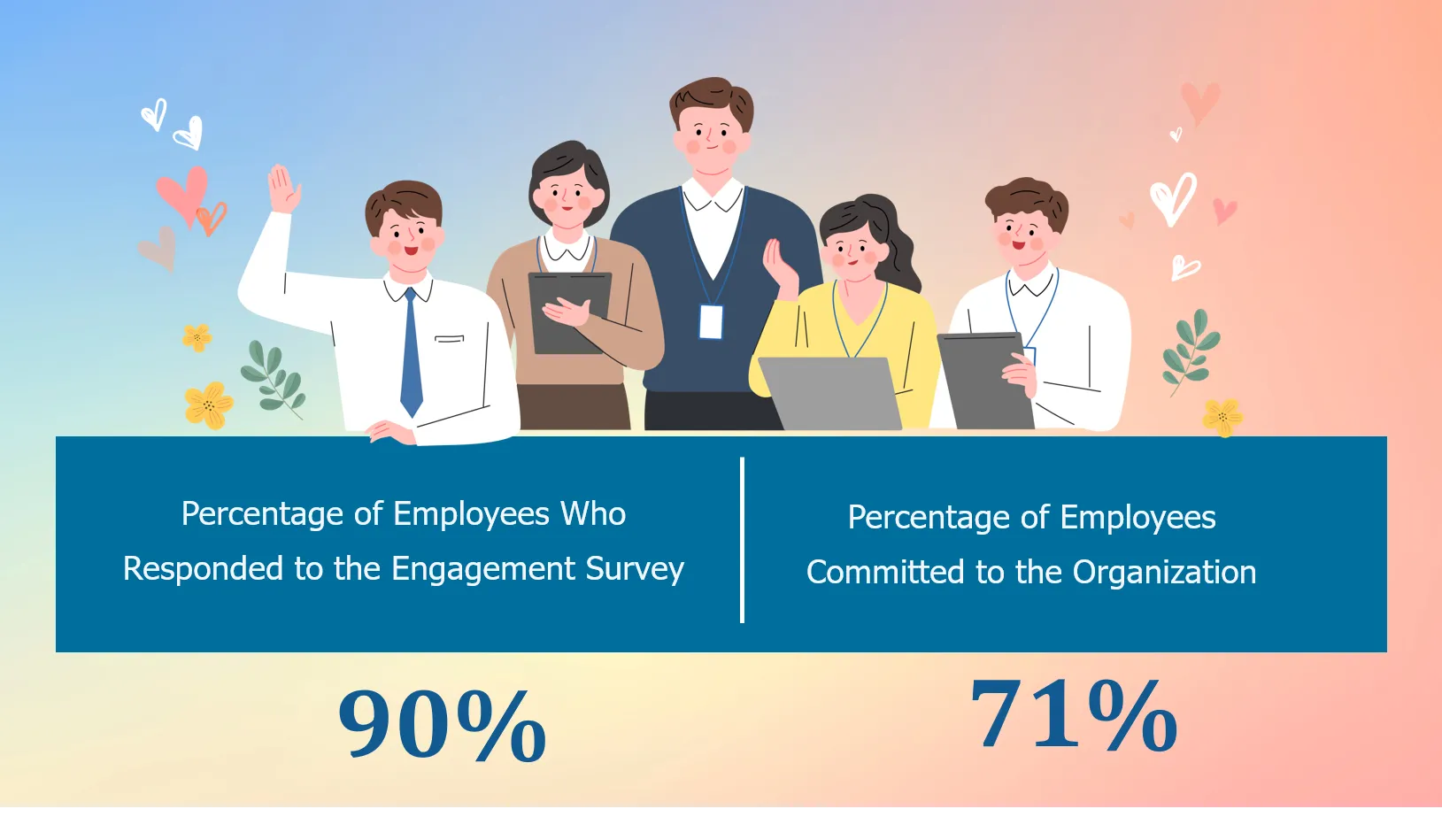
The employee engagement survey conducted in 2023 saw a 90% response rate and an employee engagement level of 71%. In 2023, OR implemented plans to enhance employee engagement based on the analysis of the survey results and key issues identified in the 2022 survey. For instance, improvements were made in the working environment and resources (workspace and parking, systems, and supportive technologies). OR has allocated suitable workspace to reduce congestion, leased additional office space and parking facilities, upgraded the IT network, and expanded Internet bandwidth to accommodate online meeting. These initiatives were aimed at meeting the growing business needs of the Company and contributed to a 5% increase in the employee engagement score in the working environment and resources factor from the previous year (from 57% to 62%).
In 2023, OR analyzed the results of the employee engagement survey and found that 3 main factors, namely senior management, work-life balance, and working environment and resources, should be emphasized in development initiatives. These results, alongside plans to address the findings and enhance employee engagement, were presented in the HR Management Committee (HRMC) meeting for approval. The HRMC approved proposed plans, including a variety of initiatives, such as an initiative to ensure consistent communication by senior management of organizational strategy and targets such that employees can support in OR’s business directions and an initiative to increase flexibility through implementing the Work from Anywhere policy. In addition, proposed initiatives included efficiently allocating workspace in the office, and providing co-working spaces to elevate employee engagement in 2024. Furthermore, the employee engagement survey results, including department-specific findings, were communicated to management, ensuring that managers were informed of the survey outcomes and taking corrective actions based on the work context, supplementary from the overall plan to enhance employee engagement across OR.