


Importance
The business activities of OR’s suppliers may have both positive and negative impacts on the economy, the environment, and surrounding communities. Due to the diversification of OR’s business activities, the risks associated with suppliers manifest in various forms. For example, in the Mobility business group, collaboration with transportation suppliers for petroleum products may impact communities if there are inadequate safety standards in transportation. On the other hand, the Café Amazon business group collaborates with agricultural suppliers producing coffee beans. This collaboration may have negative environmental impacts if coffee cultivation affects biodiversity, or positive impacts on local employment. While these impacts may not directly result from OR’s business activities, OR recognizes our role as a purchaser with the ability to promote sustainability throughout the supply chain.
Therefore, OR aims to promote sustainable supply chains through the integration of environmental, social, and good governance (ESG) standards into its procurement and supply chain management policies. OR is committed to ensuring that its business operations throughout the supply chain do not result in adverse impacts on communities, society, and the environment.
In addition to promoting the organization’s sustainability goals, OR recognizes the importance of managing the supply chain to create business opportunities for various entrepreneurs under the “S – SMALL” strategy, which is part of OR’s SDG framework.
2023 target
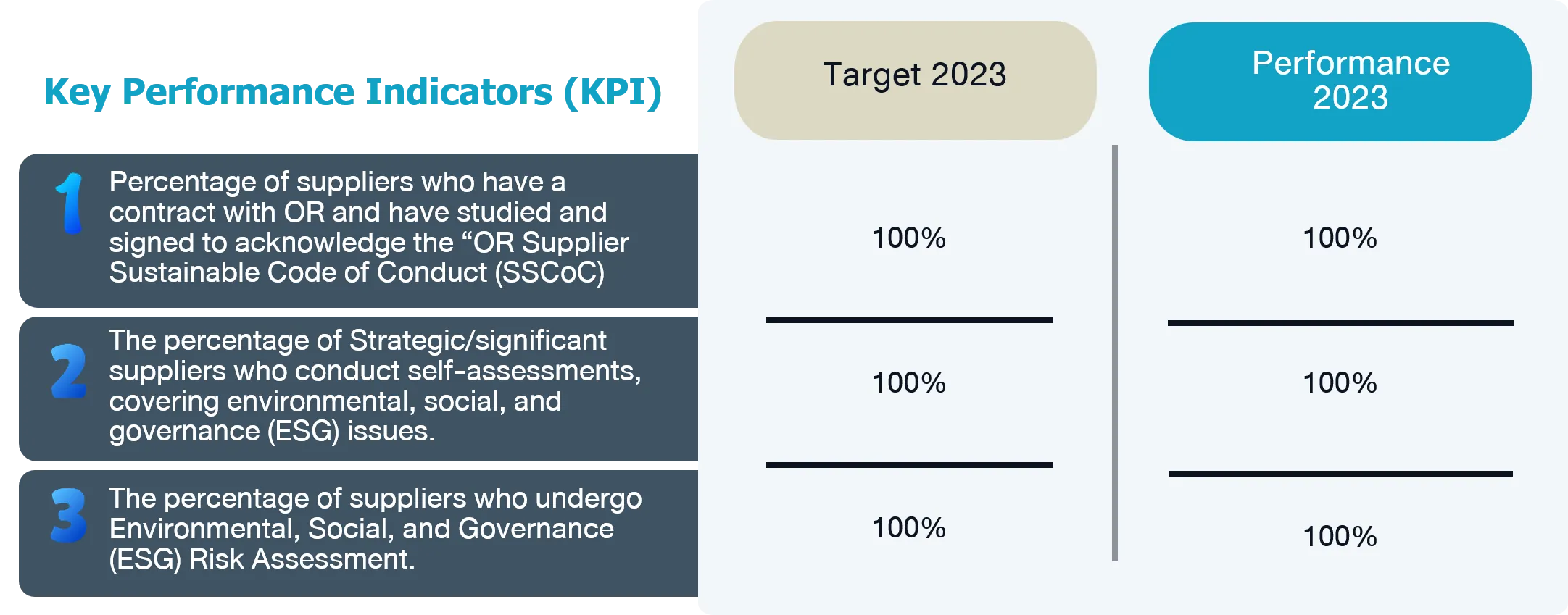
Management Approach
Procurement policy
OR has declared the Company’s commitment to integrate environmental, social, and governance (ESG) considerations in our procurement activities through the Procurement Policy, which is embedded in the OR Group Way of Conduct 2020. [Details of the Procurement Policy are outlined on page 72 of the (OR Group Way of Conduct 2023: Click)
Suppliers Sustainable Code of Conduct
OR has established the Supplier Sustainable Code of Conduct (SSCoC) to specify the standards that OR’s suppliers should adhere to throughout their business operations. This includes ethical business practices, social responsibility, safety, and environmental management. OR communicates the details of the Supplier Sustainable Code of Conduct (SSCoC) to every supplier through electronic communication and integrating the Supplier Sustainable Code of Conduct as part of the annual supplier training. Suppliers engaged in business with OR are required to sign and certify the document before entering the procurement process.
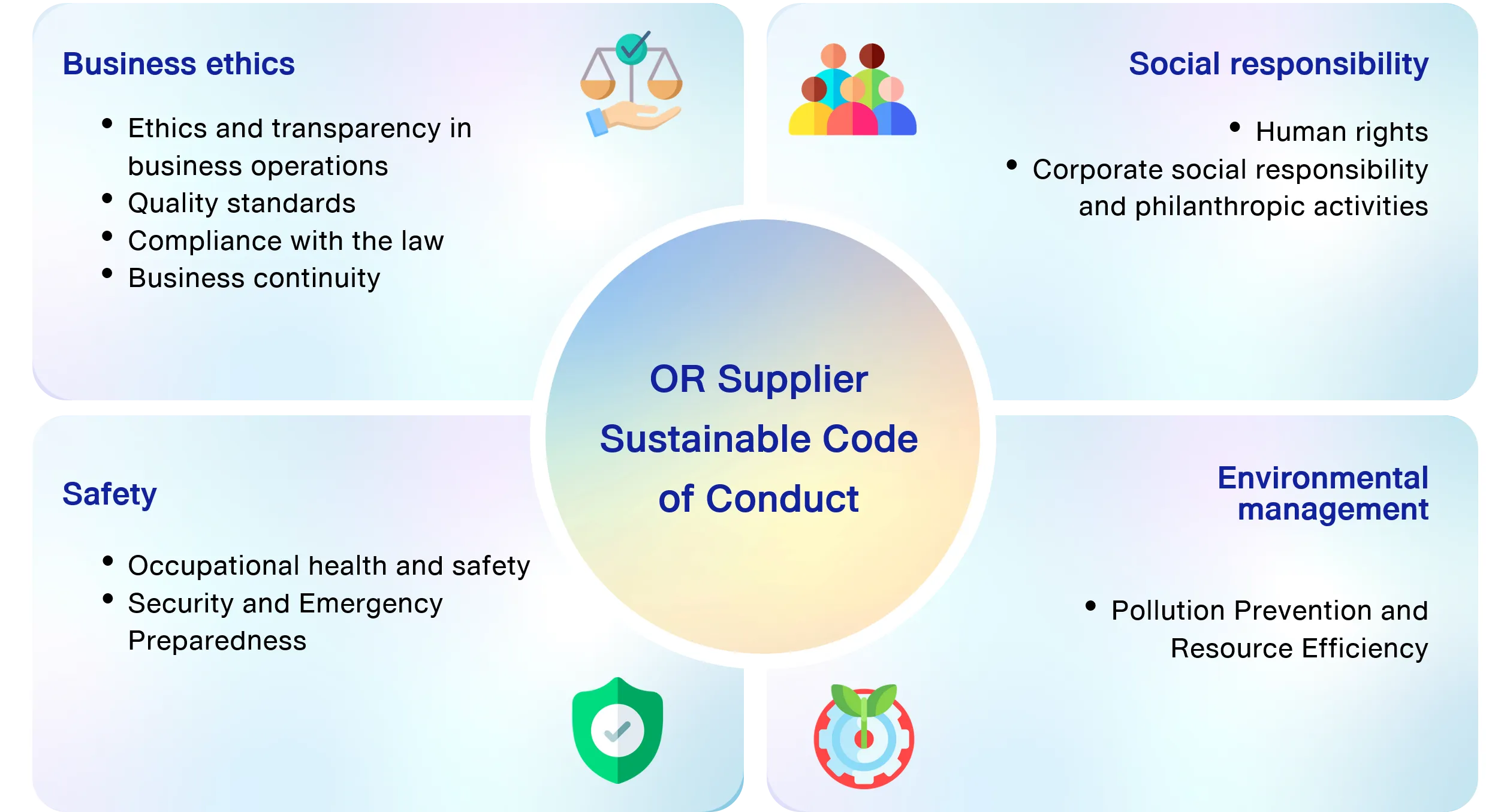
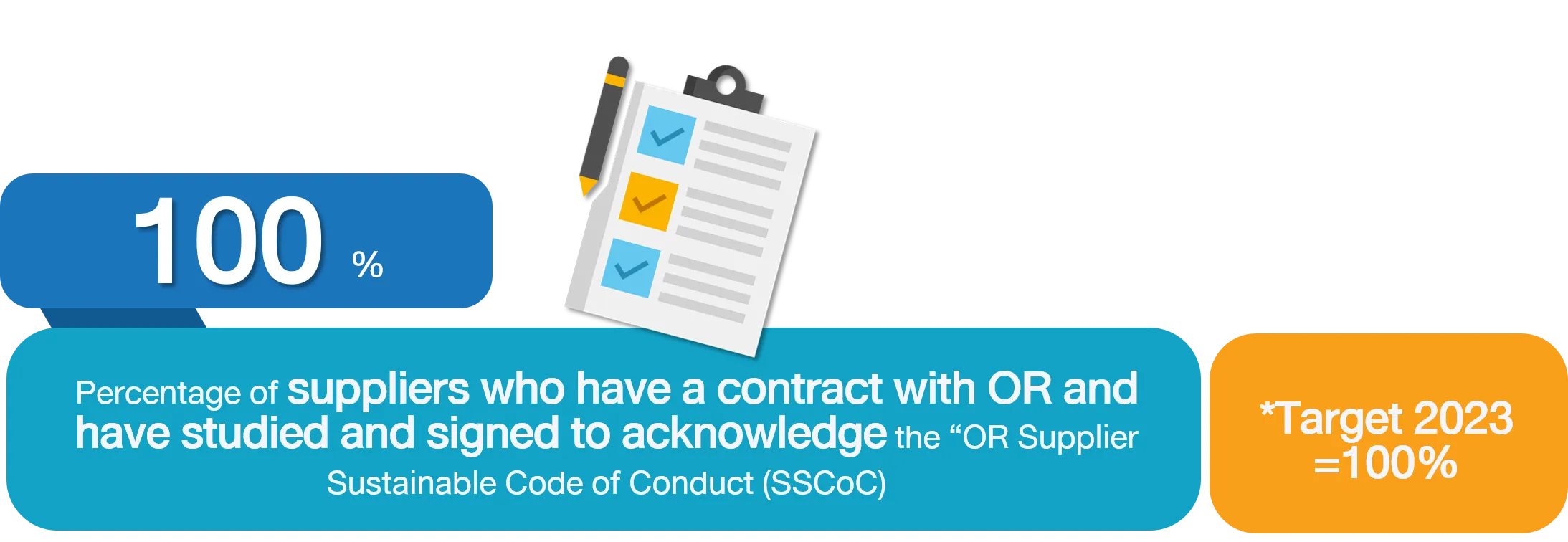
In 2023, all suppliers have signed and certified the Supplier Sustainable Code of Conduct: Click
Supply Chain Management Strategy (SCM Strategy)
The Company’s Board of Directors has established the direction and oversight of the ESG supply chain management strategy for suppliers to ensure that the procurement process aligns with the organization’s business policies and strategies. The strategy includes five key components, including:
- Perceptibility: Commit to promote supplier awareness and recognition of related requirements, rules, and regulations related to business operations, including expectations regarding transparency in procurement procedures.
- Cost Effectiveness: Promote procurement processes that are cost-effective and appropriate to the quality of products and services received.
- Centralized and Digitalized Approach: Prioritize centralized supply chain management to standardize operations across all business groups. and develop more digital interactions between OR and suppliers.
- ESG Risk Management: Controls the business operation of suppliers to ensure suppliers have effective ESG risk management measures to support business sustainability.
- Standards of Services and Materials: Prescribe the standards of product and service quality to ensure that received products and services meet quality standards and expectations of OR

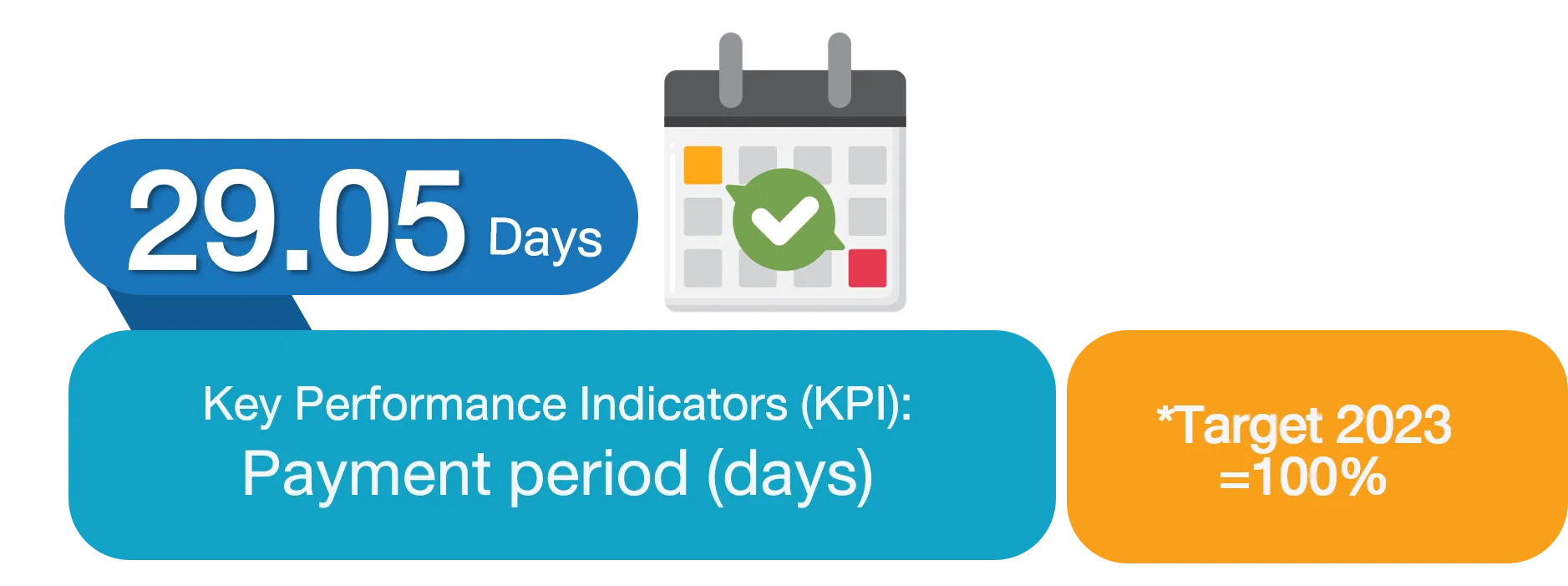
In this regard, OR recognizes that suppliers may not be able to engage in ESG activities without having a basic financial liquidity. Therefore, OR specifies the payment period in the Terms of Reference (TOR), indicating that it should not exceed 30 days after the delivery of goods or services. This is subject to the specific agreements made with each supplier.
The performance results for 2023 achieved the target:
Supplier Management Overview
OR’s suppliers are classified according to the five primary business groups. In 2023, OR had a total of 715 Tier-1 suppliers. The breakdown of the supplier business groups, key suppliers, and the procurement value are as follows:
Business Group | Example of Tier 1 Supplier | Procurement Value (Billion THB) |
| Petroleum product group |
| 6,371.16 |
| Retail Oil Business Group (PTT Station) |
| 41.55 |
| Lubricant Business Group |
| 94.71 |
| LPG Business Group (excluding LPG gas) |
| 61.55 |
| Café Amazon Business Group |
| 52.33 |
OR's supplier management process consisting of 6 parts:
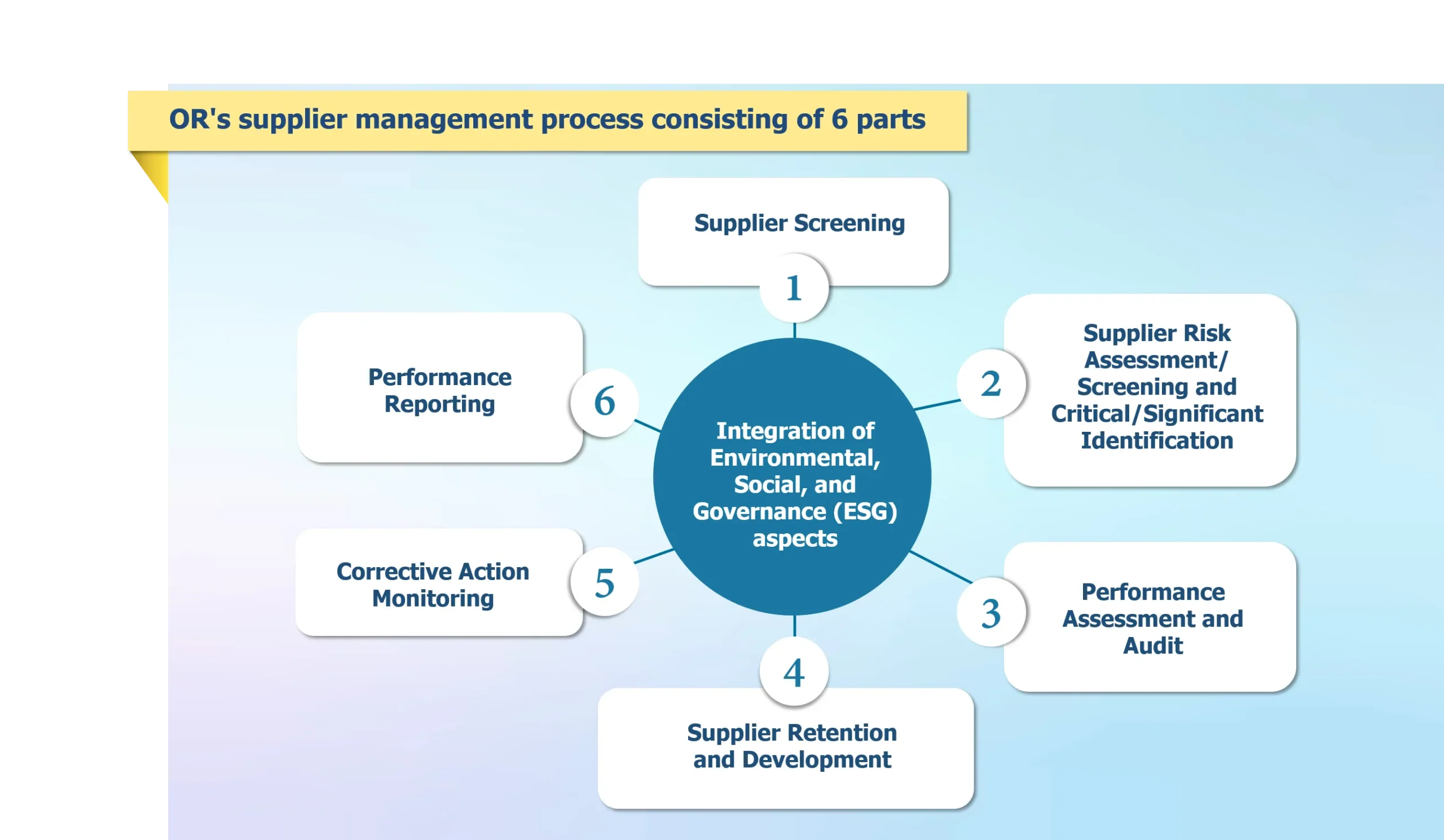
OR has incorporated environmental, social, and good governance (ESG) considerations throughout the procurement process as part of our supply chain management strategy. ESG Criteria is required in procurement processes and contracts are, for example, Occupational, Health, and Safety (OHS), risk and crisis management, and energy management.
In addition, OR has a procedure to evaluate the performance of our transporters for long-term employment contract awarding. We followed the PTT Group Road Safety Management Guideline, which consists of 5 pillars including: 1) Safety, Health and Environment Management (SHE) 2) Driver Management 3) Journey Management 4) Vehicle and Equipment Management, and 5) Organization Management. The assessment not only covers the organizational management of the transporters, but also considers various risks from the transportation services.
A sustainable supplier management procedure has been developed as a guideline for procurement staff. Key aspects include:
1. Supplier Screening
OR selects suppliers based on environmental, social, ethical, and business relevant considerations. In the preliminary step All suppliers wishing to be registered on the OR’s Approved Supplier List (OR AVL) must submit a document declaring that they meet OR’s criteria that called a “Pre-Qualification (Pre-Q)” for supplier screening consideration. The Pre-Qualification (Pre-Q) criteria cover various aspects, such as company registration status, financial status, standards for quality, safety, occupational health, and environment as well as sustainability policy and management. Additionally, suppliers are required to complete a supplier self-assessment questionnaire (SAQ), which will be as one of the criteria of the pre-qualification (Pre-Q) for supplier assessing.
The questions in the ESG self-assessment questionnaire (SAQ) cover issues related to environmental, social, good governance, human rights, and business-relevant aspects.
The procurement function will then review the documents demonstrating the Pre-Q and the SAQ results of the suppliers. Additional supporting documents may be requested, such as certifications for quality management systems (ISO9001), environmental management (ISO 14001), and safety and occupational health (ISO 45001), among others. This is done to verify and confirm the qualifications of the suppliers. Regarding the self-assessment results on ESG based on the SAQ document, suppliers must score above 60% to meet the criteria and be eligible for registration on OR’s Approved Vendor List (AVL). If suppliers score below 60% in ESG criteria, they have an opportunity to correct and improve. Suppliers can consult with OR procurement staff to make necessary adjustments to reapply for enrollment on OR’s approved supplier list in the next round.
The results from the assessment will be integrated with other criteria for supplier screening and suppliers are excluded from contracting if they cannot achieve minimum ESG requirements. This is to ensure that, suppliers who provided the services to OR perform ESG performance aligned with OR expectation. The suppliers are included in Approved Vendor list (AVL) once they have passed the supplier screening criteria. Hence suppliers with better ESG performance are preferred by applying a minimum weight to ESG criteria in supplier selection and contract awarding. The company apply 100% screening and evaluating suppliers. The evaluation process is done by a procurement function. If any gaps identified during the SAQ process, the corrective actions may be discussed between OR and Suppliers to ensure their performance meet company standards.
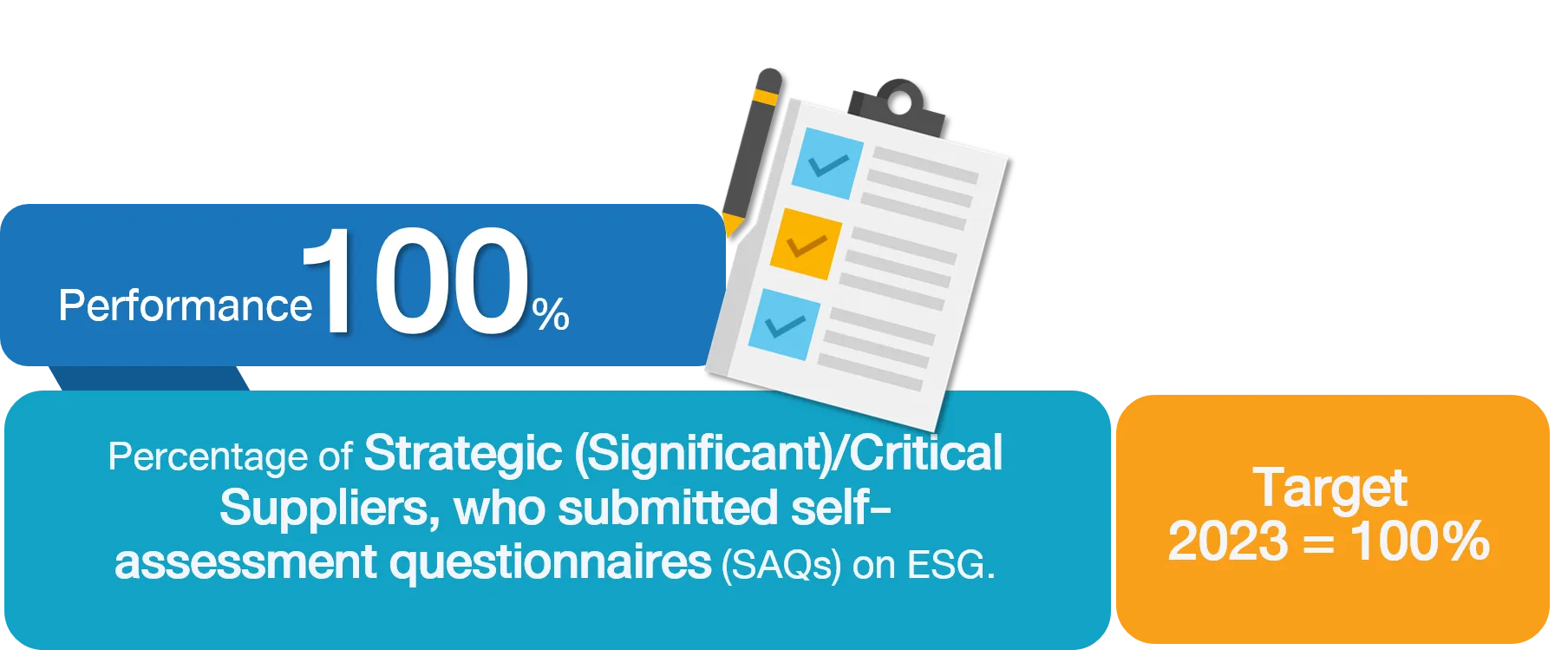
In 2023, There are there were 11 Strategic (Significant)/Critical Suppliers, with a total of 11 submitting ESG self-assessments (SAQs), accounting for 100% of all Strategic (Significant)/Critical Suppliers.
After suppliers have passed the criteria according to the supplier qualification screening process for each designated category by OR and have been registered in the Approved Vendor List, they will be eligible to bid on work within the published categories.
When suppliers participate in the bidding process, each internal OR’s procurement unit will specify criteria for selecting suppliers. This involves evaluating criteria related to price and performance, as well as qualifications as defined by OR. These qualifications may include the quality of products and services and sustainability indicators, such as respectful labour management systems and environmental initiatives such as greenhouse gas reduction. Then the scores of prices and performance of each supplier will be calculated. However, the proportion of sustainability considerations, depending on the nature of the work/products and services procured based on relevant importance. Therefore, suppliers whose operations align with OR’s sustainability evaluation criteria will receive higher scores and have a better chance of being selected, compared to suppliers with similar price scores.
Supplier Risk Assessment/Screening and Critical/ Significant Supplier Identification
The OR’s procurement unit conducts an assessment of environmental, social, governance and business relevant topics and categorizes suppliers continuously, considering information and trends at the country risks, sector risks, and product and service type (Commodity) risks. The key points for assessing supplier risks include:
- ESG (Environmental, Social, and Governance) Risk Assessment covers issues related to the environment, social, and governance, and business relevance topics with examples as follows:
Environment (E) | Social (S) | Governance (G) | Business Relevance |
|---|---|---|---|
• GHGs Emissions
• Air Pollution • Energy Management • Water and Wastewater Management • Waste and Hazardous Materials Management • Biodiversity and Ecological impacts • Sustainable Raw Material Sourcing • Circular Product Life Cycle • Deforestation Prevention and Protection | • Human Rights
• Forced Labour • Child Labour • Working Hours • Wages and Benefits • Fair Treatment • Social Diversity and Inclusion • Non-discrimination and Equality • Occupational Health and Safety • Community Relations • Fire Safety • Industrial Hygiene • Customer Welfare and Satisfaction • Human Capital Development • Labor Practices • Employee Engagement • Community Relations | • Anti-corruption and Bribery Implementation
• Fair Competition • Transparent Reporting Mechanism | • Delivery of products and/or services (quality, efficiency, and performance) |
The assessment of the Criticality/Business Relevance of suppliers cover issues related to the following factors:
- Type of products and services provided by suppliers.
- Analysis of spending on procurement of products and services in each group (High-volume Supplier)
- Level of importance of products and services (Critical Component Suppliers)
- Level of risk with a limited number of suppliers (Non-substitutable Suppliers)
OR regularly conducts risk assessment covering global risks, country risks, sector risks, and product and service type (Commodity) raised from the use of suppliers. The risks are summarized below:
- Global Risk: The risk landscape in 2023 consists of geopolitical impacts on energy price fluctuations, disruptions in the global supply chain, and a natural resource crisis, including growing food insecurity.
- Country Risk: Thailand’s slow economic growth, high inflation, high interest rates, and higher financial cost affect business operations. .
- Sector Risk: We consider industry risks for negative impacts in two sectors including energy and retail businesses. The top risks are energy supply crisis, reputational damage, rapid changing consumer trends, economic recession, and the global supply chain crisis.
- Type of products and services (Commodity) Risk: Coffee beans are at the core of Café Amazon business. The shortage of coffee bean from the intensifying climate change and biodiversity. Therefore, we emphasize diversified coffee bean sourcing strategies to foster resilient supply chain practices.
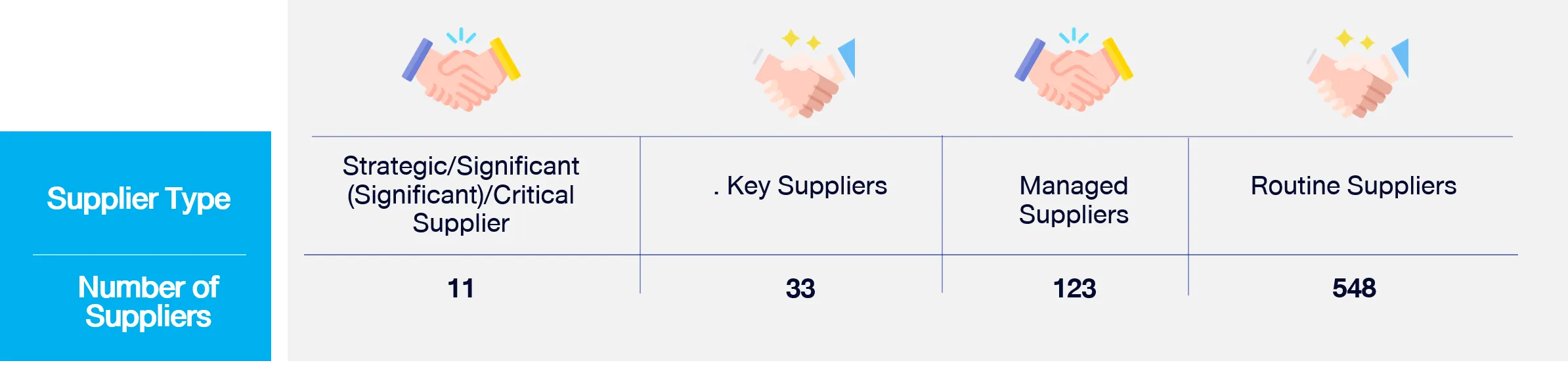
OR conducting assessments significant/critical supplier and those identified as having high-risk ESG annually. This assessment covers both critical tier 1 suppliers and critical non-tier 1 suppliers. OR’s supplier types are defined from the risk level into 4 types: (1) Strategic (Significant)/Critical Suppliers, (2) Key Suppliers, (3) Managed Suppliers, and (4) Routine Suppliers. For the appropriate and efficient management of each type of supplier, OR has established strategies and guidelines for management as follows:
Supplier Group | Definition | Management Approach | Management Tools |
1. Strategic (Significant/Critical) Supplier | Suppliers/contractors with activities associated with high ESG risks that may cause severe impacts on suppliers themselves, and OR, and expand to surrounding communities, that leading to potential impacts on OR’s business and corporate image. | Develop long-term business relationships and actions to enhance the potential of doing business together and creating added value |
|
2. Key Suppliers | Suppliers with activities Associated with moderate ESG risks that may cause impacts on OR, both in terms of business and/or corporate image. | Develop long-term relationships to control costs, reduce risks, and maintain the competitive level |
|
3. Managed Suppliers, | Suppliers with activities associated with low ESG risks that may have moderate impacts on OR and outside of the organization. | Maintain relationship based on performance and manage costs and risks according to the needs of the suppliers, and monitor performance. |
|
4. Routine Suppliers | Suppliers with activities associated with low ESG risks that may have low impacts on OR and outside of the organization. | Maintain relationship based on performance and manage costs and risks according to the needs of the suppliers. |
|
OR has an assessment of supplier ESG risks and supplier prioritization. In total, OR has 11 strategic/significant/critical suppliers that the share of total procurement spent on critical tier-1 suppliers accounting for 0.87%. OR has one significant non-tier-1 supplier (within PTT Group), therefore there are a total of 12 significant suppliers both tier 1 and non-tier 1.
Supplier Environmental, Social and Governance Audit (ESG Audit)
OR requires all petroleum product transportation service providers under OR’s main contract to undergo an annual assessment of their petroleum product transportation operations. Additionally, every supplier classified as a Strategic/Significant/Critical Supplier must undergo a sustainability operation assessment every three years to verify compliance with the SSCoC. The assessment will be conducted according to the “OR Supplier ESG Assessment Protocol”, referencing international ESG standards, including SMETA, ISO9001, ISO14001, ISO45001, and SA8000, as well as UN Guiding Principles on Business and Human Rights. This protocol covers various ESG aspects of supplier operations, such as environmental management systems and occupational health and safety management systems.
OR establishes five main approaches to supplier ESG assessment:
- Self–Assessment: Suppliers evaluate themselves by completing a self-assessment questionnaire, providing essential supporting documents. This method is applicable to all Strategic/Significant suppliers.
- Desk Assessment: Assessment based on publicly available information and an examination of suppliers’ various documents. This method is utilized for all Strategic/Significant suppliers.
- Online Assessment (2ndParty): Performance assessment conducted by consultants, external assessor, or OR’s procurement unit through online interviews/audit. This method is utilized for all Strategic/Significant suppliers.
- Onsite Assessment (2nd Party): Performance assessment conducted by consultants, external assessor, or OR’s procurement unit through at-site of operation audit. This method is utilized for all Strategic/Significant suppliers. Especially, suppliers with high ESG risk.
- Onsite Assessment (3rd Party): Strategic/Significant supplier’s performance assessment is carried out in partnership with accredited third-party assessment. In addition, this assessment is carried out by reviewing documents or evidence of international certification that obtained from accredited bodies. Examples are as follows.
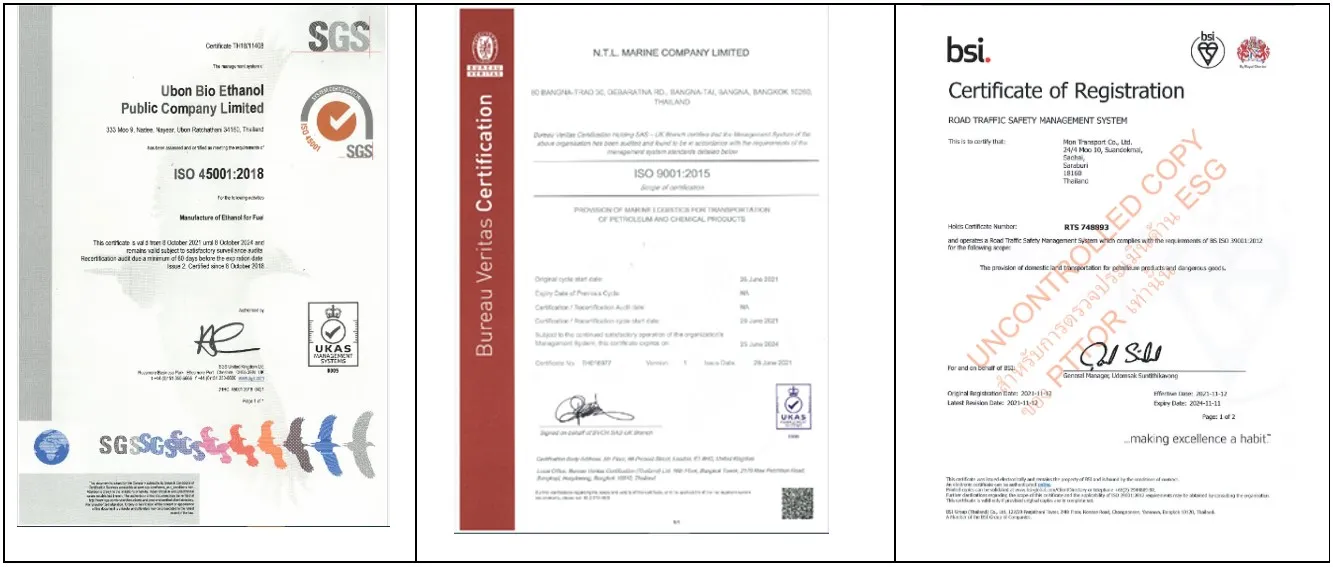
Examples of third-party certifications
The OR Supplier ESG Assessment weights include 34% on Business Governance (i.e. Business Continuity Management, Supply Chain Management, Quality Standards, Compliance with law, Code of Conduct and Anti-corruption, Risk Management), 31% on Environment (i.e. Environmental Management, Impact on Environmental and Eco-efficiency), and 35% on Social (i.e. SCR, Health and Safety, Emergency, Labour Relations and Human Rights).
If supplier’s issues are detected, the procurement unit first communicate the findings to the supplier. The suppliers are required to develop corrective action/ improvement plan. Include clearly identified measures to correct and prevent deficiencies. Including setting a time frame for completion.
In 2023, A Total of 11 Strategic (Significant)/Critical suppliers were audited for their performance related to ESG. 9 Strategic (Significant)/Critical suppliers were audited in 2023 and another 2 Strategic (Significant)/Critical suppliers were audited in the past 3 years with good results. Therefore, 2 ones will not be an audit every year according to OR’s supplier management criteria. In Conclusion, all critical suppliers, totalling 11, have successfully undergone sustainability assessments, accounting for 100 % of all critical suppliers, meeting the established target.
Key performance indicators (KPI) | Target 2023 | Performance 2023 |
| Percentage of Strategic (Significant)/Critical suppliers audited for environmental, social, and governance (ESG) risks in the past year, including document reviews, online and onsite assessment/audit (2nd party), along with consideration of documents or evidence of international certification that obtained from accredited bodies (3rd party) | 100% | 100% |
| Percentage of Strategic (Significant)/Critical suppliers assessed for environmental, social, and governance (ESG) risks over the past three years | 100% | 100% |
In this regard, the assessment of suppliers’ sustainability performance in 2023 was conducted in the form of online and On-site Assessment. From the assessment, it was found that 1 supplier (9.1%) faced significant ESG-related risks or impacts. The main issues identified include:
Key Non-Compliances | Recommendations |
| Human Rights | • Conduct human rights due diligence, communicate human rights policies, and determine mitigation measures. |
| Environmental Management | • Applying for environmental management system certification according to the international standard ISO 14001 or other equivalent certification. • Determine leading and lagging indicators for the environment and continuous performance monitoring |
OR has an internal coordination and management systems to ensure that suppliers are informed of assessment/audit results, received advice on correcting defects and participate in continuous improvement and development efforts. Peer benchmarking on ESG topics which include good practices from Peers are also provided as part of the communication.
In 2023, OR communicated and provided recommendations and improvement guidelines to support 1 supplier in implementing corrective plans accounting for 100% of those identified with ESG-related risks or impacts, have developed and implemented corrective action plans.
From the Supplier ESG Audit, the results are the following items below:
Supplier | Result |
| Strategic (Significant)/ Critical Supplier | • Audit result communication to supplier 100% • Found ESG issues which required the corrective action and had a discussion on corrective action plan 100% • Supplier were terminated based on ESG Audit 0 suppliers |
In addition to monitoring the ESG performance of Strategic (Significant)/Critical suppliers, OR conducts truck and ship transport assessments annually, following the PTT Group Road Safety Management Guideline for truck transport and using the Tanker Management and Self-Assessment (TMSA) criteria for ship transport assessments. The topics of assessment also include QSHE management operations. Accordingly, OR communicates topics that need to be improved, along with suggestions for transporters to develop their capacity according to the guidelines specified in the assessment criteria and for transport contractors to deliver according to contract.
Supplier Retention and Development
OR supports suppliers in developing sustainable practices and aims to maintain positive relationships with them. For suppliers found to have defects during audit OR will communicate and require them to plan corrective actions and improve their operations. OR provides appropriate support to each supplier. whether it be communication, activities, and initiating various projects to promote opportunities for suppliers to improve their ESG practices. For example, annual supplier seminars, supplier training, and capacity building programs specific to each business, etc.
Annual supplier seminars
OR holds annual supplier seminars to strengthen relationships. Communicate OR’s strategies and policies to suppliers, especially regarding the company’s sustainable procurement strategy. Exchange knowledge, useful information, and relevant market situations. As well as communicating news and various government policies that may affect the business operations of both OR and suppliers. It is also an opportunity for OR employees, operators, and executives to receive feedback on issues and suggestions directly from suppliers. To further improve OR’s operations and create opportunities for doing business together in the future. This will help develop sustainable business operations.
Capacity building programs specific to each business
OR has initiated capacity building programs based on the needs of suppliers in each business. These projects are developed to meet the unique requirements and preferences of suppliers, such as:
- Petroleum Product Transporters: OR focuses on enhancing safety capabilities throughout the petroleum product transportation process. This is achieved through training the transporters in the safe handling of petroleum products, adhering to standards and laws. Moreover, OR also supports each transporter in installing and utilizing In-Vehicle Monitoring Systems (IVMS) technology. The IVMS technology records travel data of the transport vehicles, used for controlling, supervising, and overseeing the transportation of petroleum products. This ensures that every transporter aligns their operations with the expected standards and safety requirements in transportation (Read more on Occupational Health and Safety).
- Coffee Farmers: OR has set a goal of raising the standards of working conditions and coffee production among coffee farmers to meet the Café Amazon standard requirements. OR has developed a sustainable coffee sourcing project in Tha Pha Sub-district, Mae Chaem District, with the intention and significant goal of expanding knowledge, developing cultivation practices, and coffee production collaboratively with network communities in various areas. This initiative aims to reach areas where farmers lack opportunities to develop sustainable skills and knowledge. It helps to achieve the production of high quality coffee that complies with environmental conservation standards. It also serves as a distribution channel for coffee beans with a fair-trade pricing system, ensuring that farmers have a stable income in line with living wage standards, leading to improved livelihoods. There are plans to expand this pilot project to other areas systematically.
Performance
Strengthening Safety Performance Amongst Petroleum Products Suppliers and Transporters
In 2023, the Petroleum Transport and Delivery Safety Development Working Group conducted random inspections the operation of contracted transporters. This included random checks on the operation of the transporters’ IVMS control centers, random inspections of coordinators, random interviews with drivers, and feedback exchanges between OR and the transporters. This was done to ensure confidence that the transporter’s operations comply with OR’s standards and safety policies.
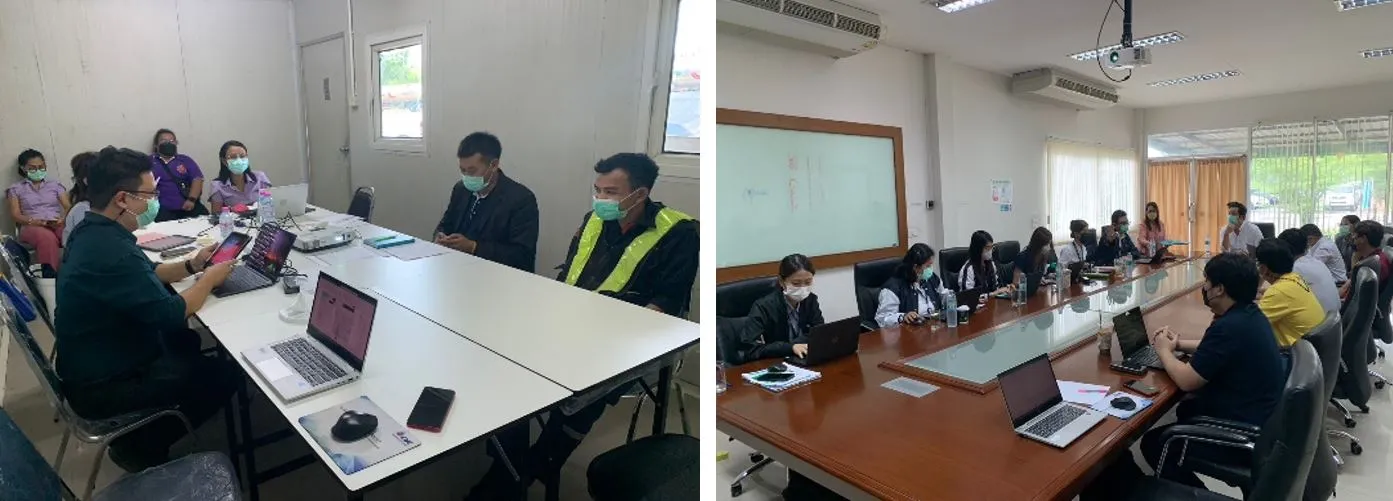
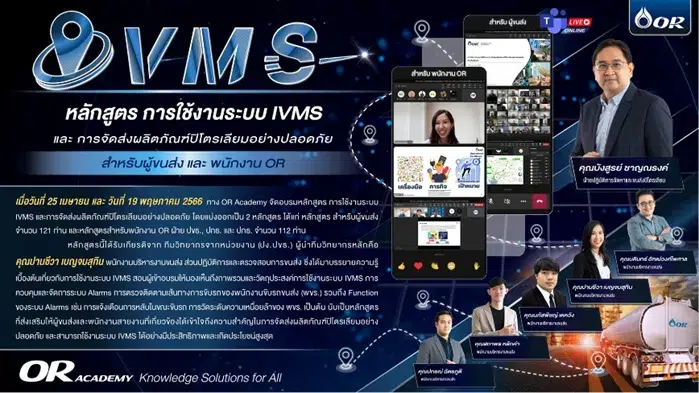
Additionally, OR also organize training on the use of the IVMS system and safe delivery of petroleum products for transporters and OR staff on April 25 and May 19, 2023, through the OR Academy. A total of 121 transporters participated in the training to enable them to utilize IVMS data for the secure and efficient supervision and control of petroleum product transportation.
Petroleum Product Transporters Seminar 2023
OR organized a seminar for petroleum product transporters to communicate policies and practices for the safe transportation of petroleum products by both trucks and ships. The seminar involved transporter representatives, OR management, and relevant departments. It featured speakers from PTT to facilitate knowledge exchange, fostering collaborative efforts to enhance operational efficiency. The focus was on advocating for safe practices in the transportation of petroleum products by both trucks and ships.
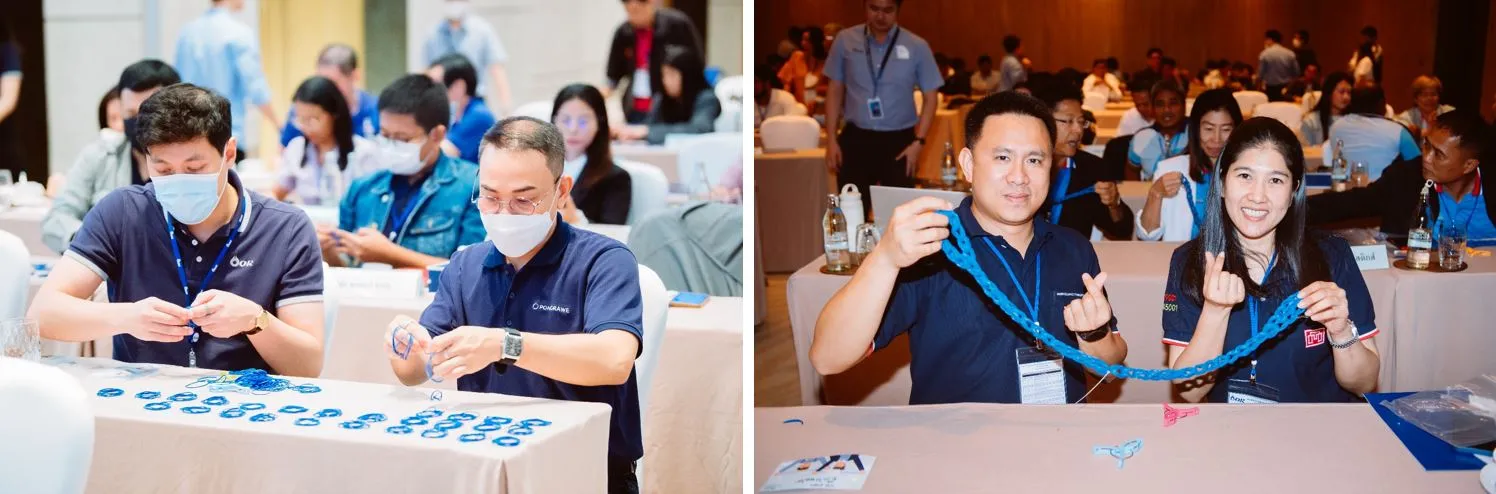
During the seminar, transporters were encouraged to participate in the “OR Flexible Volunteer” program. This initiative involves making elastic ropes for exercises in collaboration with the medical faculty of Siriraj Hospital and the Thai Foundation for the Disabled. The program aims to promote good health and provide support and encouragement to the elderly and people with disabilities.
OR, in collaboration with PTT Group, presented awards to petroleum transport companies and drivers for their outstanding safety performance in petroleum products transportation. This initiative aims to promote, create motivation, and stimulate a strong commitment to safety in transportation. It is part of the effort to build a strong awareness of safety in society, communities, and the environment. The award considers contractors and drivers involved in transportation without severe accidents, complaints, or legal/contractual violations. Additionally, it takes into account transportation statistics and driving behavior recorded by the IVMS system. In 2023, 2 transportation companies and 18 drivers received the awards.
Seminar for Petroleum Product Suppliers and Business partners 2023
In 2023, OR organized a seminar for petroleum product suppliers and business partners on October 4-5, 2023, in Nakhon Ratchasima province. The seminar gathered representatives from 9 companies involved in the oil refinery and petroleum production as defined in Article 7, including those who produce and distribute finished petroleum products, LPG, and asphalt . In total, there were 80 participants.
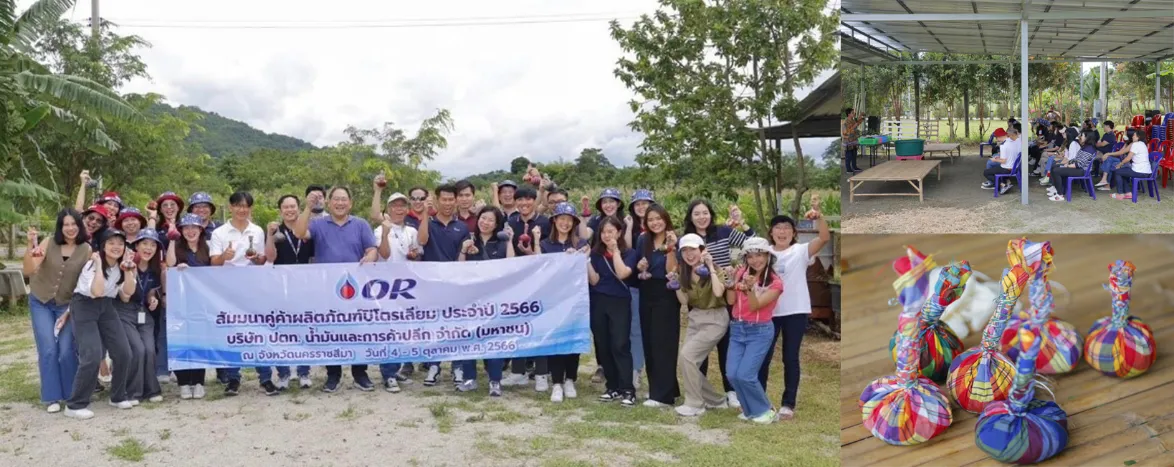
This seminar aimed to strengthen relationships and exchange knowledge regarding energy, Trends in demand and supply of petroleum products and general market conditions. Additionally, it served as an opportunity to share news and government policy that will affect the business of OR and our suppliers and business partners. As well as providing an opportunity for employees and managers of OR to receive information, issues and suggestions directly from suppliers for further improvement and development of OR’s operations. Furthermore, it aimed to create opportunities for sustainable business and mutual growth together in the future. In addition, we also organized social responsibility (CSR) activities to help the elderly and bedridden patients in communities in Nakhon Ratchasima Province. This initiative aimed to raise awareness and promote social benefits together with suppliers and business partners.
Sustainable Coffee Sourcing Project
OR conducted training on sustainability standards for 330 farmers and 17 raw coffee bean traders and developed plans to expand coffee cultivating areas according to Cafe Amazon standards, amounting to 100 rai in Mae Chaem District, Doi Inthanon, management team and CEO. of OR visited coffee farmers on September 16, 2023 to build good relations with them, providing an opportunity for farmers to showcase their potential and enhance sustainable agricultural practices.
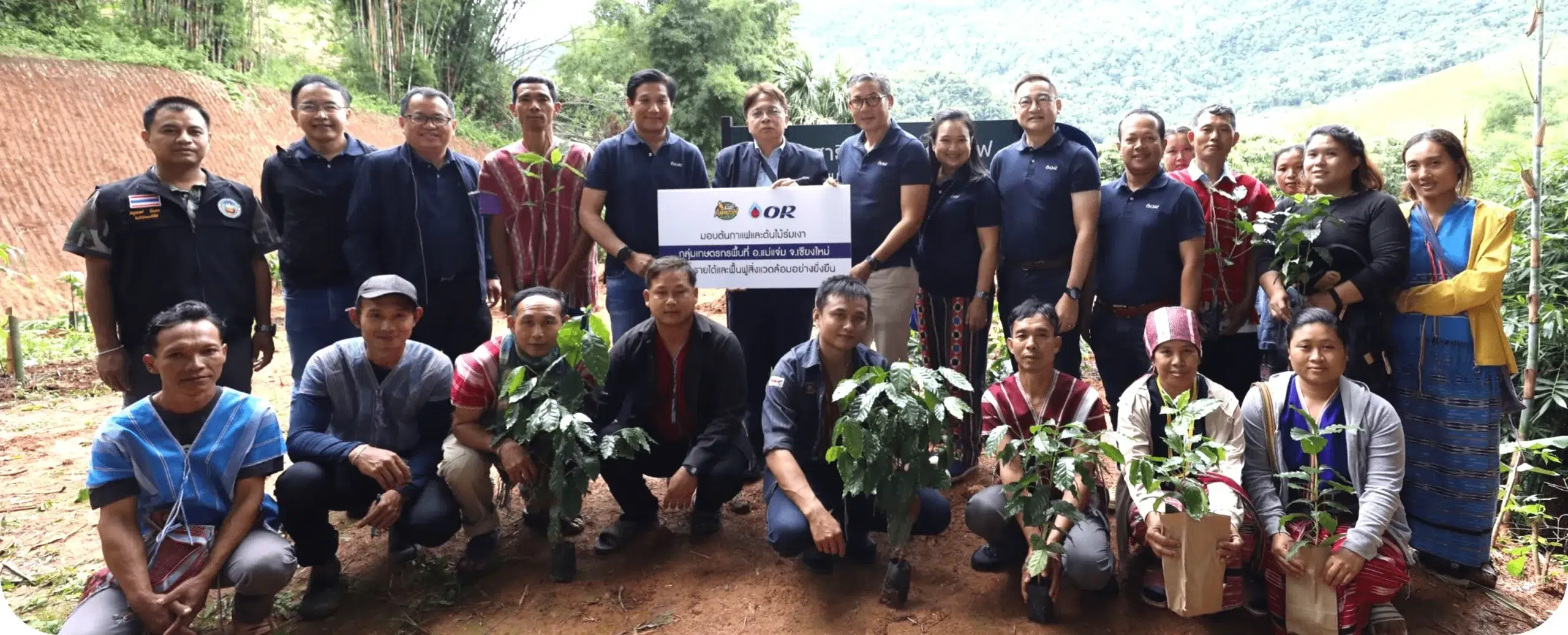
On September 13, 2023, OR signed a memorandum of understanding (MOU) with the Ministry of Agriculture and Cooperatives to promote coffee cultivation under the market-led production policy. This initiative aims to exchange knowledge with the Ministry of Agriculture and Cooperatives to encourage and support the expansion of coffee cultivation areas. The approach involves adopting integrated agricultural practices alongside coffee cultivation, providing farmers with sustainable production and increased income. Additionally, this approach helps address issues related to deforestation and environmental concerns. Café Amazon will purchase high-quality coffee produced by farmers who receive support for coffee cultivation. This aligns with OR’s commitment to create opportunities and value throughout the business chain according to the OR SDG.

Strengthening Sustainable Procurement Capacity in the Organization
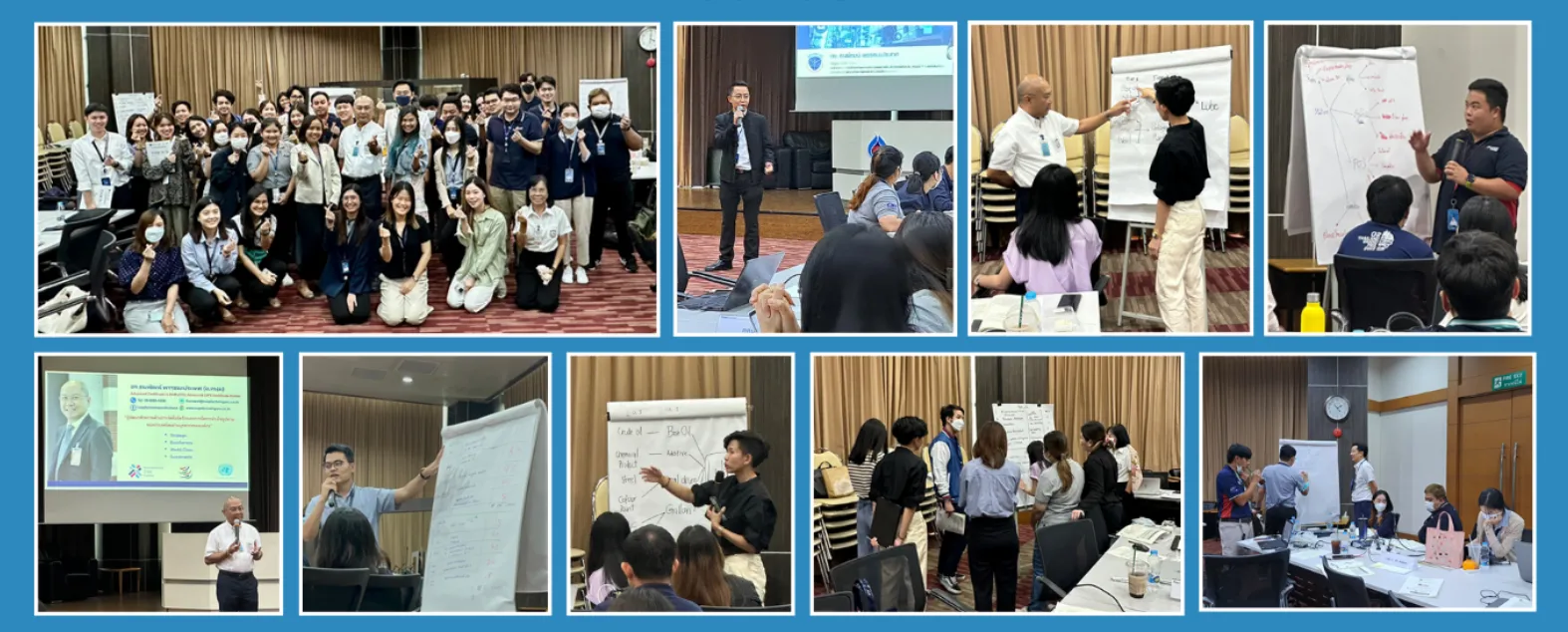
On September 13, 2023, OR organized its first sustainable supply chain management training for employees. Representatives from relevant units involved in the procurement process participated, totaling 48 attendees. The training was led by experts in sustainable supply chain management and covered essential content to build knowledge and understanding, emphasizing the importance of sustainable supply chain management. The course also addressed the processes and methods of sustainable supply chains management based on the principles of the UN Global Compact (UNGC). Additionally, a workshop was organized to analyze supplier risks and categorize critical goods and services using Porter’s Five Forces Model.
Corrective Action Monitoring
OR monitors the results of corrections made by suppliers, with the responsible units specifying and tracking progress. Suppliers are required to report the progress of their corrections and improvements in addressing issues identified every three months. The results of these corrective actions are reported to organizational management reviews, and reports are presented to management and committees at various levels.
Gaps identified from ESG audit will be discussed with suppliers and provided corrective and presentive actions. Examples are provided as follows:
Criteria | Gap Topic | Examples of corrective action/improvement plans |
|---|---|---|
Business and Governance | Business Continuity Management (BCM)
• Business Continuity Management systems (BCM) and practices for planning and preventing business interruptions have not been implemented. However, no vendors experienced business disruptions. | • Create plans and guidelines to prevent business disruptions.
• Plan to implement a business continuity management system and undertake certification in the future. |
Environment | Eco-efficiency
• There has not yet been found to set targets or create projects related to ecological efficiency, such as greenhouse gas emissions reduction projects. Reduce waste generated from operational projects Including tracking performance results | • Plan environmental project goals or reduce energy use. and create a regular follow-up plan. |
Social | Human Rights
• There has not been a comprehensive Human Rights Due Diligence risk assessment within the past 3 years. • There are no measures to correct, reduce risks, or alleviate human rights impacts/risks. | • Study and assess risks related to human rights due diligence.
• Set corrective measures to reduce risks or mitigate impacts/risks. |
In 2023, 100% suppliers implemented their corrective action plans successfully. There were no instances of contract cancellation or termination due to ESG-related risks or impacts.
Performance Reporting
Progress on implementation of the supply chain management strategy is regularly reported to management and the Board of Directors. At the management level, performance is reported to the CEO through the OR Group Quality, Safety, Health and Environment Management Committee (OR QSHE GMC) and the OR Management Committee (ORMC), respectively. At the Board level, reports are submitted to the Corporate Governance and Sustainability Committee (ORCGS) and the Sustainable Development Committee (SD Committee). Additionally, information may be included in the annual sustainability report or on the Company’s website.
Third Party Verification – In 2023 OR was verified organizational information related to internal supply chain management by external verifier.
The supply chain ESG management procedures described above are regularly reviewed to ensure its alignment with the organization’s business strategy, and that implementation by suppliers complies with the OR Suppliers Sustainable Code of Conduct: OR SSCoC and associated expectations regarding ESG performance.


